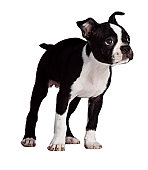
The Boston Terrier was first bred in Boston, Massachusetts, and this is where they got their name from. At first they weighed about 44 pounds, and these dogs were down from the bull and the terrier pit-fighting breeds. Boston terriers have the merit of being the first non-sporting breed of dogs in America.
Temperament
Boston terriers are very mild mannered, peaceful and loving dogs. They possess a good nature, and like to socialise. At present they are one of the most popular dog breeds in the United States. Because of their size and their friendly and relaxed personality, they have become very popular amongst dog lovers. Boston terriers are eager dogs that are forever ready to please their owners. They are also enormously loyal dogs. Boston terriers are very committed pets, and they also love to receive and give attention. Boston terriers like to be involved in the family, and can sometimes be very energetic, but at other times they can be still and distinguished.
Care
The smooth and short-haired coat of the Boston Terrier is easy to groom, and can be combed and brushed with a firm hair brush. These dogs should only be bathed when really necessary. Their faces can also be wiped with a moist cloth on a daily basis, and their eyes should also be cleaned very cautiously. Both of their ears and eyes should be checked for grass seeds, and there might also be ticks in their ears. The nails of these dogs should also be clipped from time to time. The Boston Terrier is an average shedding dog.
Training
Boston terriers get along fine with children, and will also get along well with other animals and pets. Some people say these dogs have a very naive nature considering that they get along with strangers and are keen to meet new people. Boston terriers that are socialised well are sweet and calm dogs. These dogs are also very self-governing, and have a stubborn streak. The temperament of this breed makes them just right for inexperienced dog owners, but also for the experienced owner. They are also ideal for families with children and other pets. Owners who are not capable of dedicating enough time to their pets should not acquire these dogs. They do not like to be abandoned, and they long for the company of their owners and family.
Health problems
These little dogs do have health problems, and seeing that they have such short faces they have problems with their breathing - especially when they are hot or stressed. Some are also prone to allergies, and their big eyes are easy to injure. The biggest eye problem they have is corneal ulcers. The Boston Terrier also has problems with deafness, and ingrown or corkscrew tails can also cause them problems.
All Small Dog Breeds
Breed group: Hounds
Weight: 45-80 lbs
Height: 20-27 inches
Overview
Although these dogs are originally from Louisiana, their descent can be traced back to the Bleu Gascogne French hounds. These dogs are natural hunters, and they excel in tracking and treeing raccoons, bears and cougars. The Bluetick Coonhound is capable of performing their hunting duties on any terrain and in extreme weather conditions. Bluetick Coonhounds are well-known for their cold noses, and the ability they have to track very old scents.
Temperament
These dogs are described as being clever and sociable, and they are extremely loyal to their families. This breed is reliable, deeply devoted, caring and without fear. The Bluetick Coonhound is a brilliant family companion and protector. They will do well in a home with children that are considerate. They are wary of strangers, but not very aggressive dogs. The Bluetick Coonhound will get along well with dogs that they have been raised with, but are not ideal for families with cats or other small pets. The Bluetick Coonhound howl a lot and does have a tendency to be destructive when left alone for too long, or when they are lonely. The Bluetick Coonhound makes an excellent watchdog. This breed will not do well in an apartment. Although they are fairly inactive when indoors, they will perform best in a large yard. It is advised that these dogs should not be allowed to run free when not on a leash, unless they are in a secure area. Coonhounds are inclined to go after their noses, and if they catch a scent they might walk for hours to follow it.
Care
It is recommended that these dogs are brushed on a weekly basis in order to minimize their hair loss. Bathing or dry shampooing should only be done when necessary and their ears should also be checked and cleaned on a consistent basis.
Training
It is important that the Bluetick Coonhound is socialised and receive obedience training from a very young age onwards. This is a breed that will not do well when the training is conducted in a cruel or unkind manner. Their training should involve motivation, patience and firmness - it should also be fair and consistent. The Bluetick Coonhound excels in hunting, agility, and tracking.
Health problems
The Bluetick Coonhounds are relatively healthy dogs, but they tend to have problems with cataracts, hip dysplasia, and Krabbes disease. Inactivity can lead to fatness, and their ears can be checked to make sure they are free of infections.