Drinking wine has often been considered a hobby out of reach of most regular people. It was assumed that one must have a certain level of education or air of sophistication to enjoy a great wine. Thanks to movies and other media representation, wine is enjoying an unprecedented comeback among the rest of us.
Choosing and tasting wines can seem intimidating at first, especially if you have never tasted a truly delicious wine. Many people are under the impression that fine wine comes only from France. It is true that some of the world's most fantastic wine is produced in France- notably of course. However, many other countries produce some truly outstanding wines.
A notable but often overlooked region is the Canary Islands. Grape vines have been carefully tended and wine gracefully produced in the area since the 15th century. Due to a variety of factors, the current generation of wine drinkers is not yet fully familiar with the offerings of the Canary Islands.
Canary Island wine was once regarded with great admiration by enthusiasts everywhere. The English were particularly fond of the strong, sweet wines produced in Tenerife. Even William Shakespeare was inspired to include a mention of 'Canary Sack' in The Merry Wives of Windsor.
The production of Canary Islands wine was greatly decreased in the 18th century due to a number of economic and political reasons. Relations between Spain and England deteriorated while sanctions were placed on wine exports. With the difficulties involved in producing and exporting wine, many growers simply moved on to different trades. By the late 19th century, the world had all but forgotten the once-beloved Canary Islands wine.
Today, a concerted effort is being made to revive the wine trade in Gran Canaria, Lanzarote, Tenerife and the other Canary Islands. This resurgence is evident in the carefully-tended grapevines that dominate much of the landscape on the islands. The locals have not lost their magical touch, and today some of the world's most worthy wines are coming from the Canary Islands.
The current wine producers in Tenerife are of special note. Their creativity and artistry are evident in every sip. Because of the unique climate and location of Tenerife, it is possible to grow many different types of grapes on the small island. These conditions have resulted in a variety of truly memorable wines.
On the island of Tenerife alone, 42 wineries can be found. They produce a similarly impressive number of wines, ranging from hauntingly fragrant reds to jaunty rose's to crisp whites. A welcome addition to the resurgence of the wine trade has been the tourists who travel to Tenerife just to experience the wineries firsthand.
What wine did for certain areas in California a decade ago, it is doing now for Tenerife and the other Canary Islands. Wine tourism is flourishing and a new generation of wine drinkers is becoming acquainted with the region that was once said to produce some of the finest wines in the world. Far from simply capitalizing on their ancient reputation, Canary Island winemakers are today producing exceptionally creative and modern tastes that nearly everyone can enjoy.
Canary Island Date Palms
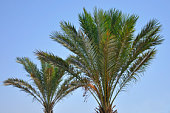
The Canary Island Date palm, Phoenix canariensis, is one of the most sought after and spectacular palm trees seen in Georgia, Florida, Alabama, Mississippi, Louisiana, Lower Texas, and coastal South Carolina. This large, formal palm tree, looks great when grown next to Mediterranean architectural structures at resorts and hotels, such as the Cloister Hotel, at Sea Island, Georgia, where the large Canary Island Date palms are planted and grown at the entrances to the hotels, and stretching up the boulevards as a street tree along Sea Island Drive. These Canary Island Date palms produce dates, but barely palatable; are very slow growing, and the unique triangular leaf scars are very ornamental. You can buy Canary Island Date palms in large specimen sizes that are extremely expensive, but small trees are reasonably priced at most nurseries.
Other Phoenix Date Palm trees that show moderate cold hardy traits are the standard Biblical Date palms, Phoenix dactylifera; the celebrated plant of the Scriptures of the Hebrew Bible, documented thousands of years ago in Deuteronomy 8:8, "A land (Israel) of wheat and barley, and vines and fig trees, and pomegranates, a land of olive oil, and dates (palms)." A huge grove of these large date palms grow outside Yuma, Az, where the date products are harvested seasonally from the trees with tall ladders, as they have been for decades past.
The Wild Date palm, Phoenix sylvestris, called the Sylvester palm, is not a fast growing date palm tree, but the blue-green foliage forms a large canopy of leaves that persists for years. The wild, large date palm tree, Phoenix sylvestris, can grow to 40 feet, but the trunk is slender, and this wild date palm will readily hybridize with other date palms growing nearby. You can buy large specimens of wild, date palm trees that are very expensive, but smaller trees can be purchased at reasonable prices. This palm tree has also been called a Toddy palm, because the sweet dates are harvested and fermented into an alcoholic drink, a Toddy.
The Chinese Fan Palm, Livistona chinensis, is a well adapted tree to large areas of the South. The huge leaves are fan shaped (palmate), and not fast growing, but the large heavy leaves give a weeping appearance. You can buy these Chinese fan trees cheap, but almost any nursery sells them, and they can survive cold hardy temperatures, around 20 F.
Mexican Fan Palm Tree, Washingtonia robusta, is also called the Washington Palm Tree, and grows faster than most other cold hardy Palm Trees. The fan shaped, bright green leaves are large, growing 6 feet long. Mature Washington Palm trees can grow 100 feet tall, and small Washington Palm Trees are so fast growing and inexpensive to buy, many people are planting them. Large Washington palm trees planted in front of motels at Waycross, Georgia, have survived extreme cold winters, and even when leaf canopies were frozen and black, the new shoots grew back in the Spring to renew their beauty.
The European Fan Palm, Chamaerops humilis, also called the Mediterranean Fan Palm, is a beautiful cluster palm; a favorite palm tree planted abundantly at the Cloister Hotel, at Sea Island, Georgia. The European Palm Tree forms multiple, daughter, closely connected, palm trees that were planted and grown as circular groups, although if the daughter palm trees are removed after the trunks grow to 3 ? 4 feet, single trunked specimens can be grown in the landscape. The leaves are very variable in color, from green to silver. This very delicately leaved plant is controlled by a graceful, slender trunk, that is embedded with long brown fibers. In Mediterranean areas, the European Palm tree is often grown as a street tree, planted in large containers. Its slow growing character makes the European palm tree well adapted for planting in pots.
Both Roger Munns & Patrick Malcolm are contributors for EditorialToday. The above articles have been edited for relevancy and timeliness. All write-ups, reviews, tips and guides published by EditorialToday.com and its partners or affiliates are for informational purposes only. They should not be used for any legal or any other type of advice. We do not endorse any author, contributor, writer or article posted by our team.
Roger Munns has sinced written about articles on various topics from Marketing, Family Travel and Cars. For information about Tenerife, which includes cheap flights to Tenerife visit yourtenerife.netOther. Roger Munns's top article generates over 201000 views. Bookmark Roger Munns to your Favourites.
Patrick Malcolm has sinced written about articles on various topics from Gardening, Family and Environment. Learn more about various plants, or purchase ones mentioned in this article by visiting the author's website: TyTy Nursery. Patrick Malcolm's top article generates over 27100 views. Bookmark Patrick Malcolm to your Favourites.
Bowling Game For Kids The American Bowling Congress started in 1895. Now there are about 55 million players in the US and bowling has become the American game, played to unite and promote equality among fellow men