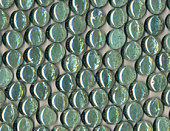
Long before gemstones were faceted or pearls were cultured, ancient glass beads ranked on a par with the most precious gems. Beads of all kinds have been traded, collected, and treasured throughout human history. Beads are one of the oldest forms of art. They have been used for tens of thousands (some say hundreds of thousands) of years. A tenth century Arab once said that the Vikings would "go to any length to get hold of colored beads". Certainly colored beads of flame worked glass from Birka, native amber and jet, carnelian and silver imported from India and Iran via Islamic and traders, rock crystal, garnet, amethyst, gold, and bronze were other types of beads highly prized by people from the ancient world. The word bead comes from the Anglo Saxon words bidden (to pray) and bede (prayer.)
Collecting ancient glass beads is a field of growing popular interest. Glassmaking originated in the Syro-Palestine area around the third millennium BC and was developed in Egypt in 1330 BC. The Phoenicians became the greatest glassmakers and exporters of the ancient world. Chemistry for the coloration of glass was already in place during the reign of Tutankhamun in Egypt (circa 1330 B.C.), and colored glass was heavily exploited for furniture and architectural inlay for several centuries thereafter. Although the Romans had nothing to do with the invention of glass, during the first century A.D. they did play a primary role in the industrialization of the glassmaking process in the Mediterranean world.
The glass seed beads, sometimes referred to as trade beads, played an important, if not somewhat of an ignominious role in the colonization of North America. Columbus' first trade with the people of the Americas was done with the use of red hats and string beads to gain the confidence and admiration of the indigenous people. October 12, 1492, Columbus recorded in his logbook that the natives of San Salvador Island were given red caps and glass beads. This is the earliest written record of glass beads in the Americas.
With the exploration and settlement of the New World, the demand for beads grew higher and higher. Explorers, traders and missionaries had great use for beads as a unit of exchange with the people of the New World, and Africa. Beads are not just adornment! No, beads have been used by mankind for centuries, and not even just modern mankind. This makes them a fascinating and popular item to collect especially the ancient glass beads.
Glass Beads For Bracelets
Beads can be made of various materials like seeds, wood and plastic. But glass beads are the best ones from the aspect of looks as well as durability. Glass as a material is transparent and this is the reason you can add pulsating colors and textures to these glass beads. There are various types of glass beads like handmade dichroic glass beads, Czech glass beads etc.
The usage of glass beads is very common in making of lampshades, jewellery, bead embroidery and many more. The glass beads come in different shapes, which include round, oval, and shapes like various figures like fishes and birds. The textures that can be added to the glass beads are like druk glass and many more. The glass beads are comparatively expensive than the general ones.
Types of Glass Beads
The glass beads are categorized in various types according to the shape and designs. The beads that are perfect round in shape and often come with an optically polished finish are called the druk glass beads. The colourful beads with innovative twisted and figurative shapes are the glass beads made for lamp work.
Incandescent beads which are available in a whole host of contours. The Czech glass beads are the ones with pearl finish and vibrant colours. The glass beads are made from molten glass and different additives are used to bring the exquisite colours and textures.
Glass Beads and Jewellery Making
There are variety of designs and patterns available in glass bead jewellery. You can buy them from the stores or the professional jewellery designers or even make them on your own. Commonly bracelets, necklaces, earrings and other jewellery can be made with glass beads. As this jewellery can be made with a variety of colours and textures, they can be matched with the dresses quite easily.
There are many people who prefer their rosaries to be made of glass beads. A traditional rosary with 59 beads or a bracelet with 11 glass beads can look simply great. The process of making jewellery with glass beads is quite easy and takes very little time. You will just need a needle, some wire and few multicoloured glass beads to make an outstanding piece of jewellery.
Other Usage of Glass Beads
There are many people who like to decorate their designer tops with colorful glass beads. These beads can be used to make excellent patchworks and embroidery on women's garments using the technique of normal bead embroidery. Then there are lamp workers who include the glass beads to create a dreamy effect in the lampshades.
Apart from the conventional usage you can use the beautiful glass beads in making handbags, stylish hair bands and many more with the bit of imagination in you.
Both Terry Kubiak & are contributors for EditorialToday. The above articles have been edited for relevancy and timeliness. All write-ups, reviews, tips and guides published by EditorialToday.com and its partners or affiliates are for informational purposes only. They should not be used for any legal or any other type of advice. We do not endorse any author, contributor, writer or article posted by our team.
Terry Kubiak has sinced written about articles on various topics from Education, Jewelry and Religion. Also find ancient Roman gold pendants, rings, necklaces, more beads, Persian rings, Persian necklaces and manuscripts. Plus lots more of. Terry Kubiak's top article generates over 3600 views. Bookmark Terry Kubiak to your Favourites.
has sinced written about articles on various topics from . . 's top article . Bookmark to your Favourites.
Definition Of Debt Ratio Each bond entitles the holder to interest and principal repayments. Bonds are traded in the bond markets, and are widely used as relatively safe investments