We are becoming more and more divided by technology. Your customers' dread interactive voice-response, the on-hold music that doubles the annoyance of queuing, the codes and passwords, are all barriers to effective communication.
The rage among your customers has reach an intensity which is now causing great damage to your relationships with your customrs. We are now dehumanizing our customer relationships even more than conventional advertising ever did, the very objective of which was to do the exact opposite!
Your customers appear to be invisible to you except as computer generated stereotypes, while your organisation is viewed as remote and unreachable causing stress and suspicion rather than customer satisfaction.
According to a recent study by database software specialist Data Vantage, fully 89% of service providers are failing to deliver the seamless service your customers want.
Causing damage to your brands, customers to defect, thus putting more pressure on sales.
It would appear that most customer information in to days service organisations, expensively acquired, is wasted, and what does get through to Management is contaminated, diluted or otherwise unusable.
All this results in huge amounts of waste. Companies are drowing in data however, they are, oddly enough, starved of knowledge!
All resulting from a complete misunderstanding of that little word "communication".
It would appear, understandably I hasten to add, that one of the main reasons this frustration and anger occurs, is when one of your customers calls your 'phone centre to complain about a bill and then they receive a threatening reminder through the post a week later!
In reality you and your customers are being divided by technology. your relationship,conducted through computers has become so depersonalised as to be dangerous to the very well being of yor brands and business.
And, sad to say, any new channel of communication simply increases managements' opportunity to repeat mistakes. For example if you send an email, your call centre will not have seen it!
As we said earlier, all resulting from a complete misunderstanding of that word "communication".
So let us examine that word 'communication' a little more closely. A dictionary definition of communication is as follows:
Communication. n.1. Transmitting 2. A giving or exchange of information, etc by talk, writing b) the information so given 3. A means of communication 4. The science of transmitting information.
The interesting fact is the expression 'the exchange of information'.
Communication is not a one-way flow of information. Talking at or to someone does not imply successful communication. This only occurs when the receiver actually receives the message, which the sender intended to send. Message rejection,misinterpretation and misunderstanding are the opposite of effective communication .
This basic model assumes that the sender is active, whilst the receiver is inactive or passive and the message is comprehended properly. In this case if the message is creatively prepared and sent through the right medium and if it cuts through all the other noise, and then if it is decoded correctly the message has done its job!
In closing please allow me to stress that we are, despite appearances, creating more problems than we realise, all this new technology is doing is alienating your customers more than ever before.
With all the other problems, clutter, meaningless noise, mistrust, it is now vital that we rethink our position on all commercial communication. The fact is that you, the Client, can literally halve your colossal marketing budgets and armed with a true interpretation and understanding of the word 'communication' and be more cost effective...on all counts!
Large Amounts Of Data
Data Overload
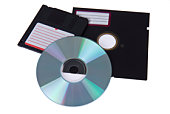
Mass data means large volumes of data or bulk data. Both in a standalone PC as well as in a network environment, we generally face the problem of managing data. The data grows day-by-day thereby creating problems of data handling. No doubt there are various techniques and devices that are capable of storing large amount of data like hard drives, optical disks, tapes etc. Hard drives are now available in almost all new computers. Data on a hard drive is stored on it through magnetic material. CD-ROM stores data on compact disks and it can store data up to about 600MB. Another relatively new device in competition to CD-ROM is DVD (Digital Versatile Disk) that has a capacity of 4.7 GB to 17GB and rate of data access from 600 Kbps to 1.3 Mbps. All of these devices manage and store in different ways. If you are working in network environment then these techniques are not going to help you as much as others.
Most businesses need to store data in order to make it accessible whenever required. NAS (network attached storage) is a fairly new mechanism of managing data, which use special devices that are connected directly to network equipments. These devices are accessible to clients through a server; each client has its own IP address. NAS is centralized storage technology. If you want to store more data or want to expand the storage then just add another device. Another technology that is quite popular nowadays is SAN (Storage Area Network), which is a network of storage devices. These storage devices are connected to each other and to a server with the help of some special switches. SAN takes the backup of data from your network without affecting the standard network infrastructure.
For connecting SAN storage devices, you can use fiber channel, a latest and most significant technology that interconnects storage devices and allows them to communicate at very high speeds and at greater distances than previously possible. It can cover up to 6 miles.
Two techniques that are quite popular these days for data storage are RAID and SCSI. Both are high speed and reliable techniques in data storage. These techniques can be implemented in most storage mechanisms like DAS, NAS and SAN. RAID is a series of standards that improves performance and fault tolerance by using a redundant array of inexpensive disks (hence the acronym). This type of protection is required in all data storages.
Three major factors that need consideration in any data management technique or data storage device are capacity, speed and security. Capacity means amount of data that can be stored. Speed means rate at which data can be retrieved. Some common interfaces for data storage are fiber channel, IEEE 1394, IDE, SCSI controllers and USB.
Some advanced techniques for managing data on your computer are DFS (Distributed File System) and EFS (Encrypting File System). DFS helps in locating and managing data on network. DFS bonds files on different computers and make them appear as single “namespace”. EFS are used to store encrypted files on NTFS volumes. EFS prevent unauthorized user access.
According to your needs you can choose any of the techniques for data management and data storage.
Both Paul Ashby & Halstatt Pires are contributors for EditorialToday. The above articles have been edited for relevancy and timeliness. All write-ups, reviews, tips and guides published by EditorialToday.com and its partners or affiliates are for informational purposes only. They should not be used for any legal or any other type of advice. We do not endorse any author, contributor, writer or article posted by our team.
Paul Ashby has sinced written about articles on various topics from Advertising Guide, Marketing Strategies and Recruitment. Over $10 m has been invested in independent research which proves conclusively that interactive communication, properly executed is far more effective than advertising. Please visit: http://effectiveaccountablecommunication.blogspot.c. Paul Ashby's top article generates over 9900 views. Bookmark Paul Ashby to your Favourites.