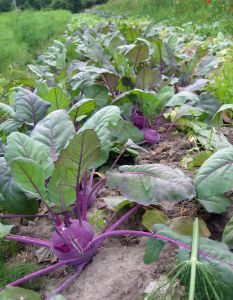
Hence, prevention of infestations rather than treating them as and when they occur is crucial. This can be done by spraying your plants with solutions that deter many of the most common garden pests. There are many organic solutions available. However, you can make your own by using recipes that can be found in most organic gardening books. Most of them are similar to tea and are concocted with ingredients like hot pepper sauce and garlic.
Organic or Biological Control of pests in agriculture is a method of controlling pests including insects, mites, weeds and plant diseases that relies on predation, herbivory, parasitism or other natural mechanisms. Biological Control reduces pest populations by using natural enemies of the pests and typically involves active human participation. Classical Biological Control is the introduction of natural enemies to a new locale where they did not originate or do not occur naturally. One of the earliest success of biological control was with the cottony cushion scale, a pest that was devastating the California citrus industry in the late 1800s. The vedalia beetle, a predatory insect and a parasitoid fly were brought in from Australia. Within a few years, the cottony cushion scale was completely controlled by these introduced natural enemies.
Whenever possible, you should try to plant species that are native to the area where you reside as these plants have natural immunity to many common diseases in the area. There are also plants that are pest-resistant, and will not have as many problems with pests of other varieties.
You should also try planting early to avoid the worst part of the bug season. Insects have just a short period of each year in which they will be active and eating your plants. Thus if you plant early, you may just be able to harvest before those insects terrorize your plants.
One other method is to encourage natural insect predators like ladybugs, praying mantis, ground beetles, and birds to come into your garden. Plants like mint and rosemary can help attract many beneficial bugs that can help you keep the destroying insects under control.
It pays to keep a close eye on your plants as you will then be able to spot potential problems before they get out of control. If you see a hornworm on your tomato plant, pluck it off quickly and drown it in soapy water. By keeping a close watch on your plants daily, you have a chance to stop these problems before they become too difficult to handle.
If you are having trouble with a particular pest, you can take pictures and then try to identify the pest. Go online and try to search for it. If you cannot identify it, you can take your pictures to your local county extension office or library and ask for help identifying it.
Some pests can be prevented by installing netting over your plants. This is probably the last resort you would want to use to save your plants from utter devastation especially when you are experiencing a particularly bad season of beetles or other such bugs.
Just remember, netting will also prevent beneficial insects from reaching your plants, so if some pests make it through, it may be harder to detect them and for predator insects to control them.
Pest control is a very difficult part of organic gardening. If you lose a crop to insects, you may be tempted to abandon organic gardening and rush out to buy a chemical spray. A lot of organic gardeners experience this so do not feel bad. It can be frustrating dealing with pests especially when you have put in a lot of effort to take care of your plants all season.
But just remember, organic gardening has many benefits that is truly worth going through all that extra work. Your entire family will be rewarded with healthy foods that are safe to eat!
Organic Vegetable Pest Control
To be successful at organic vegetable gardening you must draw up detailed plans. The soil is your first consideration; how to make it rich and fertile, and how to prepare it so harmful pests won't attack your vegetable garden. The two ways that organic vegetable gardening differs from conventional gardens is the usage of fertilizer and how to keep pests under control. Phosphorous, nitrogen and potassium are the three components essential to your organic garden.
For lush, green foliage you must have nitrogen. For strong roots and stems phosphorus is needed. And for the important protection from disease and brief cold snaps, potassium is a must. Let's call them the big three. The big three are available in commercial fertilizers however they are synthetic. In organic vegetable gardening the big three are added in a much different way.
The best way of enriching your soil is by compost. Dig some pits in your back yard to start your compost from kitchen refuse. Use things like pine needles, corn stalks, leaves, carrot tops, fruits or vegetables that have spoiled, manure, egg shells and coffee grinds. Some organic gardeners use weeds in their compost but I do not recommend this for obvious reasons. As the compost materials decompose they release bacteria and fungi into the soil that you are preparing. The bacteria and fungi convert nutrients like nitrogen to ammonia and nitrates that will be usable for your vegetables. Use substances such as seaweed, potash salts, tobacco stems and wood ash to help make potassium in your compost. By making your own compost, you are controlling the mixture and balance to achieve the right combination for your organic vegetable garden.
To be absolutely sure that your compost has completely broken down and is now offering up the right balance, start working it into the soil at least two weeks before you plan on planting.
The pH in the soil must be right for healthy plants. Test your soil, if it has a ph of 0 it is very acidic, while a 14 is extreme alkaline. Of course a seven indicates neutral soil. To raise the pH of the soil inexpensively use ground limestone. An additional benefit of the limestone is that it contains magnesium something that most soils lack. If, on the other hand, you have extreme alkaline soil use sulpher to bring the pH down.
Pest control in organic vegetable gardening is also different that conventional gardening. In many conventional beds gardeners wish to eradicate all pests with pesticides. Many in organic gardening only wish to keep the pest population down so to have a balance in the garden. Obviously, whenever possible, plant pest resistant vegetables. In order for harmful organisms to grow, they need bright sunlight so keep thick mulch around the plants to deny the organisms that needed sunlight and to help hold moisture into the ground. If you find you have a heavy infestation here is a natural pest control formula:
In a jar, combine 1 teaspoon dishwashing liquid and 1 cup vegetable oil. Shake vigorously. In an empty spray bottle, combine 2 teaspoons of this mixture and 1 cup water. Use at ten-day intervals (or more often if needed) to rid plants of whiteflies, mites, aphids, scales, and other pests.
Follow this tips and you are on your way to raising a healthy and plentiful organic vegetable garden.
This article may be distributed freely on your website and in your ezines, as long as this entire article, copyright notice, links and the resource box are unchanged.
Bachelor Of Science In Architecture So if someone is busy with his routine life but somewhere within wants to pursue this course there is no place better than FHCHS