“We trust that the magic of sound, scientifically applied, will contribute in ever greater measure to the relief of human suffering, to a higher development and a richer integration of the human personality, to the harmonious synthesis of all human “notes" of all “group chords and melodies" - until there will be the greater symphony of the One Humanity."
Roberto Assagioli M.D.
Music can be employed as assistance in obtaining physical, emotional and spiritual health. During the first half of the nineties, I investigated the therapeutic consequences of distinct types of music on patients under adequate anaesthesia. This investigation was done in Johannesburg at the Garden City Clinic, over a period of four years (1991-1995), with statistics done at the Witwatersrand university, by dr. Jackie Galpin.
Data available on investigations done to test the therapeutic benefits of music, would fill a library of its own. That was not what was done. The effect of music with a known therapeutic value, was investigated on patients under adequate anaesthesia - testing for reduction in pain levels and a shorter recovery period. It is an accepted dictum in psychology that people in a deep sleep, coma or under anaesthesia can hear (not remember). That the auditory pathways up to the auditory cortex actually remain open and untouched by anaesthesia. That you can talk to people in a coma or undergoing surgery, and that the body would respond to whatever was said. In many hospitals, positive suggestions are given to patients in a coma and on the operating table. The capital aim of the project was to test music to serve as a credible alternative for the positive verbal suggestions.
Music has powerful effects on people, whether they are educated in music or not. Wertheim (1961) states that “muscle perception and performance is an inborn capacity of the human brain. This ability is common among human beings and is independent of education or culture....." This makes the application of music as a therapy, or music as an aid to any other therapy, very simple.
Science, Medicine and Anthropology have completed many years of investigation on the effect of music on the physical body. As early as 1830, articles were published by J. Dogiel, which outlined experiments done to affirm music's dynamic effect on the body. Absolute physiological reactions were established, and amongst other things, it was proved that music act on the circulation of blood, and can cause blood pressure to rise and fall. According to this, these alternations of pressure rely mainly on the influence which auditory stimulation has on the medulla oblongata and the auditory nerve.
During the first half of the previous century, many investigators throughout Europe agreed that music increases metabolism in a very adequate way, and that it changes muscular energy and enhances respiration.
The positive effects of music on physical and psychological health are truly widespread. In an article on music as cause of disease and healing agent, Assagioli (1965) states that “through its influence upon the subconscious, music can have a still more definite and specific healing effect of a psychoanalytic character. If of an appropriate kind, it can help in eliminating repression and resistance and bring into the field of waking consciousness many drives, emotions and complexes which were creating difficulties in the subconscious".
It is known that certain kinds of music have the ability to reduce pain, whether it is physical or emotional. Scarantino (1987) states that “Pythagoras of Samos taught his students that certain musical sequences, chords and melodies produced definite responses in the human organism, and could change behaviour patterns that accelerated healing processes"
In a further discussion Scarantino states “In the 1970's, Bulgarian researchers, under the direction of Dr. Georgi Lazanov, discovered a holistic approach to learning, that allows the body and mind to work in harmony through the linking of music and verbal suggestions.... While listening to largo movements from works of Baroque era composers, with tempos slower than the average heartbeat (sixty beats per minute or slower), the vital signs of test subjects slows down in rhythm with the music, relaxing them physically but leaving their minds alert for the assimilation of information. When the various educational data was presented to the students while the music played in the background, the students experienced significant increases in awareness and retention of information and a whole repertoire of health benefits, including relief from pain and headaches....."
Relief of physical pain and stress was also observed during the investigation at the Garden City Clinic, Johannesburg. A double blind experiment was performed to investigate the effect of four different genres of music on the pain, discomfort and recovery levels of patients undergoing total abdominal hysterectomies and laparotomies, and it was found that patients who received music had lower pain- and stress levels, specifically with the use of Mozart's piano concertos.
Baroque Music (1600-1750) – Music of this period is characterized by neatness and precision. Composers were highly influenced by the strict rules of Pythagorean principles and harmony. Their philosophy was that music is the bridge that links all things in the universe.
Well known composers from this era are: Bach, Händel, Vivaldi, Teleman and Corelli.
Classical Music (1750-1825) – During the 18th century a movement called “The Age of Reason" began amongst philosophers such as Voltaire, Locke and Jefferson, who believed that the world could be controlled through reason and science. During this period it was believed that there had to be a reason for everything, and an all-over simplicity was sought that was not known in earlier centuries. The Classical period in music tends to be associated with this movement, and composers perfected the forms of classical music such as the sonata, symphony and concerto. Music from this period tends to be “easier listening" for the musically unsophisticated.
Well known composers from this era are: Mozart and Haydn.
Romantic Music (1825-1900) – Composers from this era wanted to overwhelm their listeners and wanted to “melt their hearts". The main focus was on the melody and the romantic themes tended to be lyrical.
Well known composers from this era are: Beethoven, Mendelssohn and Tchaikovsky.
COMBINING MUSIC AND DEEP BREATHING
Relax by breathing deeply while you sit in an upright position with closed eyes. Listen to the music of any of the above-mentioned composers, especially the slow movements of concertos from the Baroque, Classical and Romantic eras. Remain in this meditative-position for as long as desired.
The combination of breath- and music therapy provides a powerful tool in establishing the physical and emotional health of the individual.
Nymph completed her L.T.C.L. in music and drama, and obtained a B.A. Psychology and Philosophy a few years later. She trained as formal singer under various renowned vocal advisers and performed in numerous concerts, recitals, and oratorios. After a car accident that lead to a few neuro surgeries, she began investigating the benefits of deep relaxation and wrote a few books and numerous articles on the subject.
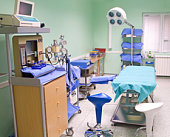
Patient In Operating Room
For our model, we will use a six room operating room in a community hospital with a moderately busy, Trauma Level II emergency room. In most jurisdictions in the United States, a Registered nurse must be present during surgery. So if all six rooms are booked with surgeries, a minimum of six RN's should be scheduled. Allowing for breaks for rest and lunch, another RN should be scheduled, this one called a Floater in some institutions, a Facilitator in others.
Paraprofessional staff includes Operating room technicians, also utilizing Licensed Practical Nurses in this role, which is known as the scrub person. At least one scrub person per room plus an extra should be scheduled.
Additional staff may be needed if complicated surgeries requiring more than one scrub person are booked. For instance, if a camera is being used, a scrub person may be used to hold the camera. Specially trained nurses run equipment such as lasers, while the nurse assigned to the room takes care of the regular tasks.
In some institutions, the ‘floaters' are also responsible for organizing the instrumentation and supplies that will be used during each case. This important task can save valuable time between cases. Everything that is needed in the room is prepared and gathered together.
Environmental workers such as maintence and housekeeping are essential to the smooth turn over of cases. Ideally, two cleaning persons should be available to clean as soon as a case is finished. If the clean up is delayed, the turn over of cases and ultimately the transition of cases is slowed down which can increase costs due to overtime.
A well run Operating Room has, at its core, an adequate staff.
Both Nymph Kellerman & Jackie Kent are contributors for EditorialToday. The above articles have been edited for relevancy and timeliness. All write-ups, reviews, tips and guides published by EditorialToday.com and its partners or affiliates are for informational purposes only. They should not be used for any legal or any other type of advice. We do not endorse any author, contributor, writer or article posted by our team.
Jackie Kent has sinced written about articles on various topics from Home Management, Install Flooring and Spyware. New Surgical Tools Jackie Kent is an author and expert at operating room proceedures and medical supplies.. Jackie Kent's top article generates over 2400 views. Bookmark Jackie Kent to your Favourites.
Close To My Heart Book They come in a pack of 8, which makes them perfect for splitting with a scrapbooking buddy page 33.Have you been inspired? I know that I cant wait to get my creative juices flowing.