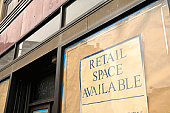
Foreclosure of a mortgage typically extinguishes all claims to the property. In other words, if you've negotiated a lease and started a business, your right to use the retail space is terminated by foreclosure unless there is a separate agreement.
Will Lender Cancel?
In many cases, the lender has a defined period of time to reject leases or they are assumed to remain intact. Further, lenders often want to retain the leases and tenants to make the property more salable. However, if the rental rate for a lease is well below market rent, and the tenant is clearly successful, the lender would likely terminate the lease and require the tenant to negotiate a new lease at market rent.
Negotiating From a Position of Weakness
The tenants negotiating position is much weaker than it was when he first negotiated the lease. The tenant has a successful business at this location. Changing the location of the business may damage or destroy the business. The tenant's ability to bargain and negotiate lease terms is a weak.
Nondisturbance Clause
Tenants can avoid this dilemma by obtaining an agreement that the lease will not be terminated by foreclosure. This is termed a nondisturbance clause. Landlords are reluctant to grant this concession due to the limitation it imposes on the landlord when obtaining financing.
Maintenance Standards
The definition of maintenance standards is often vague. A typical clause may read that "the landlord will maintain the property in a manner consistent with local practice and a prudent owner".
Personal Guarantees
Landlords love personal guarantees since they substantially limit the tenant's ability to abandon operations at the retail space. Personal guarantees should be avoided by tenants whenever possible. It is reasonable that the tenant repay the unamortized portion of any tenant improvements and leasing commissions if the lease is terminated early. Further, it is reasonable for a tenant to guarantee a minimal level of performance on a building built to its specifications.
Different Rules for Second Generation Space?
However, for second-generation lease space, it is reasonable to request that the tenant not be personally or corporately responsible beyond paying the unamortized portion of tenant improvements and leasing commissions. Although this is reasonable, it may not be possible. The strength of the local rental market and local practice will dictate whether landlords can extract personal guarantees from tenants.
Purchase Option
For single tenant retail buildings, tenants often want a right to purchase the building at a predetermined price. Landlords prefer to avoid this. A compromise is providing the tenant a first right of refusal.
Sublease Issues
Landlords want the tenant to make rental payments throughout the lease term, but don't want the tenant to profit from subleasing the retail space. In some cases, the tenant has the right to sublease the space subject to the landlord's approval. There's often a clause that the landlord's approval shall not be withheld unreasonably. There's also often a clause limiting the types of businesses which can sublease from the tenant. Sublease payments in excess of payments on the primary lease can be an intensely negotiated item.
Minimum Hours of Operation
Some retail centers require fixed hours of operations for each tenant. The concept is great. If a shopper visits the mall, they know each store will be open from 9 a.m. until 9 p.m. (or whatever the hours of operation). However, assume you expect to get 90% of your business between 12 p.m. and 5 p.m. In some cases, the minimal hours of operations are nonnegotiable. You may need to consider the excess hours of operations part of your occupancy cost.
Dedicated Parking
Dedicated parking is another issue where interests almost always diverge. Tenants love to have parking dedicated to their customers and landlords hate having parking dedicated to any one store. Peak traffic for a store may occur in a short period of time. However, the parking spaces are typically dedicated 24 hours per day. A compromise is the right to put portable signs in front of parking spaces several hours per day consistent with the tenant's peak hours of business.
Expansion Options and First Right of Refusal
Expansion rights and first rights of refusal are less typical for retail than for office. However, assume you are opening a small restaurant in a highly vacant shopping center. You're initially taking 1000 square feet of space but hope to expand the restaurant to five or 10,000 square feet of space. Having the right to take additional space at a previously agreed-upon rental rate and to claim additional space through a first right of refusal can be invaluable. Once the restaurant is successful, negotiating rental rates at a favorable level will be difficult.
Example
For example, assume your restaurant has been operating successfully for two years and you expect to expand the restaurant during the next 12 months. Unfortunately, your landlord tells you he just leased the spaces on either side of you. A first right of refusal for additional space can allow you to avoid this problem. Consider whether the rental rate for the first right of refusal is the rate agreed upon by the landlord and the new tenant or a predetermined rate.
Retail Space For Lease
Are Nearby Stores Complementary?
Next review whether the retail space you are considering is complementary to nearby retail establishments. For example, it would not be appropriate to put a liquor store adjacent to a school for troubled children. However, a dry cleaners, nail salon, office supply store and dollar store might all fit well in their neighborhood shopping center anchored by a major grocery chain.
Complementary Stores
Grocery stores, drugstores and gas stations tend to be complementary. In some cases, they are all provided by one retailer. For example, many of the Sam's Club or super Wal-Mart's have groceries, a drugstore and sell gasoline. In addition, there has been a growing trend for grocery stores to sell gasoline as a loss leader. Their objective is not to make money selling gasoline. Their objective is to increase the number of trips customers make to the store to buy groceries.
Category Killers
In some cases, "category killers" cluster in a power center. (A category killer is a retailer who stocks every conceivable item relative to a category. Office Depot is a category killer for office supplies. Petco is a category killer for pet supplies.) Having four to six category killers in one cluster is referred to as a power center.
More on Category Killers
The stores are not linked in a physical sense, other than being part of the same planned development. In other words, they were likely developed at the same time on one large tract of land, but there is no enclosed pathway between the stores. Other examples of category killers are Home Depot, Circuit City, Best Buy, Linens N Things and Bed Bath and Beyond.
Example of Complementary Uses
Another example of complementary use retail uses would be to put a beauty products store, hair salon, tanning salon, nail salon and spa contiguous with each other in the same retail center. Customers interested in one of these businesses may well be interested in at least one of the others.
Avoid a Deal Killer
Complementary uses can be a meaningful enhancement of a location. However, uses which are clearly inconsistent with your proposed location may be a deal killer.
Construction
When retail space meets the minimally acceptable standard for the previously discussed criteria, it is time to review the costs to prepare the retail space for your business. In broad terms, the costs include signage and the cost of renovating or redoing the improvements within your space.
Tenant Improvements
At this point, you need to know the landlord's policy regarding tenant improvements. (Tenant improvements are worked performed to make space suitable for a business. It can include adding restrooms, demolishing and adding walls, floor coverings, window coverings, signage and virtually anything else related to physically preparing the retail space for your business.
Will the Landlord Pay?
The landlord is usually willing to fund tenant improvement expenditures provided he is confident the tenant has the financial capacity to pay rent for the term of the lease. If you're representing a national retailer with a strong balance sheet, landlords will practically spend as much money as you request on tenant improvements. Of course, the cost of the tenant improvements will be built into the rental rate.
It's Up to You
If you're a start-up business with no track record and little capital, landlords will be cautious about expenditures for tenant improvements. They will likely want you to fund tenant improvements for your space. The benefit is your rental rate will be lower. However, you'll have to include the cost of preparing your space for occupancy in your initial capitalization.
TI Details
Other issues related to tenant improvements include defining the work to be done, and who has financial responsibility for performing the work. If you're a national retailer, you might provide a landlord with a detailed set of plans for your space. It is then up to him to cost effectively provide the buildout you are requiring. If you're a smaller retailer, the landlord may provide a tenant improvement allowance, and require you to interface with contractors to have the work performed.
How Much TI?
The cost of tenant improvements occasionally exceeds $100 per square foot for second-generation retail. It is generally much lower. Even if the landlord is willing to provide substantial funds for tenant improvements, be cautious about the scope of work for tenant improvements. The landlord's expenditure for tenant improvements is essentially a loan which will be repaid with your rent during the term of the lease.
Who pays for ADA?
If the space requires tenant improvements which require obtaining a building permit from the city, review whether you'll have to replace the restroom because of ADA. (ADA is the Americans with Disabilities Act). In most cases, changes to provide ADA compliance are not necessary if you not require a building permit. However, a consequence of obtaining a building permit is typically that the space must be revised to completely comply with ADA. Replacing the bathroom so it is ADA compliant can be expensive.
The Market Research and Consulting division of O'Connor & Associates provides information necessary to make decision to commercial real estate professionals. Occupancy and Rental Data, ownership and management information are routinely gathered for four major land uses ? multifamily, office, retail and industrial. This information allows investors to compare competitive properties, facilitate business decisions and track market and submarket performance. In addition the data is useful to brokers who for example continually monitor Houston retail space leasing, Houston office space leasing, Houston industrial space leasing, Houston apartments, Dallas apartments, Ft. Worth apartments, Austin apartments, and San Antonio apartments.
Patrick C. O Connor has sinced written about articles on various topics from Property Agents, Property Tax and Real Estate. O'Connor & Associates Market Research division offers both timely data and consulting services to real estate brokers, investors, lenders, developers, and other real estate professionals. This includes information regarding. Patrick C. O Connor's top article generates over 49500 views. Bookmark Patrick C. O Connor to your Favourites.
3rd Party Liability Insurance What most people do not know is that moving companies have third party moving services. These moving companies hire special people to do the specialized jobs