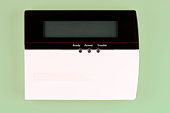
When it comes to protecting our homes and families, there's little any of us would not do to ensure the procurement of the most comprehensive safety measures. Home security has become buzz words of this generation; door and window alarms, motion detectors, and in-home law enforcement communication have all become standards features in today's homes.
But as technology continues to evolve, home security must keep pace. And keeping pace it is with a whole new generation of wireless home security that will change the face of safety in our homes.
While currently considered more technologically complex and still too pricey for average homeowners, wireless home security will one day be the accepted safety equipment in every home.
The most prevailing feature of wireless home security will be the all-in-one unit that houses smoke, fire, carbon monoxide, motion detectors, and door/window alarms and is activated through a remote control that works anywhere in the home. When the system is breached in any capacity, law enforcement will be notified along with your cellular phone or hand-held device. Security lights – also activated through the wireless home security unit – can be accessed through the remote control as well. Additionally, cameras that are pre-set in different areas of your home can show you what's happening at any given moment around your property – as seen on a predetermined channel of your television.
To find out more about wireless home security and the options being offered in homes around the world, logon to the Internet. There are vast resources on home security and measures you can take right now to make your home a safer place. Also, you can learn more about the wireless home security units available in your area and the specific features they offer.
Wireless home security is the future of home security. And, in fact, it can be the future of your home's security. With a little research and planning, you can make your home the very safest it can be for you and your family.
Complete Wireless Home Security
Taking the plunge and deciding that you want a wireless home security system amongst all of the other products on the market is a huge step. However, the next decision comes with your confidence in your own abilities. Installing a wireless home security system doesn't have to be a difficult process. If you know a little about reading instructions, and if you were able to connect your television to your VCR, you may want to try to configure your system yourself. Arm yourself with the right tools and make a learning experience while protecting your home and your family.
Wireless home security electronics have few parts, but that does not mean that you should ignore the packaged directions. Most of the wireless home security systems can be installed with the everyday tools that you find in your garage, but no one wants to make a mistake. You must first decide where you want the control panel to go. The only constraints for a control panel are that it must be near an electrical outlet. However, where you place your control panel can make a difference because you don't want a control panel easily reached by a predator who could smash it the instant he or she breaks in, and you don't want any sound of the alarm to be muffled by the alarm being concealed.
Next, you will want to install the control panel. Even though your home security alarm system is labeled wireless, there will be a wire of some sort, so don't be fooled by names. You will need to drill a hole behind the control panel, and then another one below the outlet so that you can connect the two. If you are concerned about your abilities when it comes to wiring, don't worry, the wireless security systems usually come with a battery that will act as a backup in case the power goes out or the device is unplugged.
The siren and control panel programming will be the next step on your list. You will need an electrical outlet for the siren just like the control panel. Typically, in order to program your sirens, you will be able to use a common screwdriver. However, all systems are not created equal, so you will need to check with the manufacturers instruction packet when dealing with this step. The control panel programming will be easier if you locate the spreadsheet with step-by-step instructions in working with your keypad. Remember not to throw away any of the paper materials that come into the package with your system. There should be a manifest on the first page of the instruction booklet. If you feel like you are missing something, call the manufacturer's help line and they will send you another one in the mail.
After you have finished all of the programming needed, you will need to install the sensors. Sensors are usually placed on windows and doorways. It is not a problem if these are visible because it may let an intruder know that you have an alarm and prevent any windows being broken. The sensors are usually plastic and can be installed with an electric screwdriver.
Being able to achieve any task that, at the start, seems challenging is a rewarding experience. When you install your wireless home security system, you may feel relieved and proud, but don't forget that you want the product to work. The last step in any installation is to test your alarm to make sure that it is in working order. There are many different resources that can let you know what home security prices and rating for different products are, and then you can decide which system would be the most compatible with you. Also, don't be afraid to ask questions before you buy a wireless home security system because you don't want to get stuck with an impossible system that will end up costing you more money than you want to spend.
Both Michelle Bery & Sam Ellis are contributors for EditorialToday. The above articles have been edited for relevancy and timeliness. All write-ups, reviews, tips and guides published by EditorialToday.com and its partners or affiliates are for informational purposes only. They should not be used for any legal or any other type of advice. We do not endorse any author, contributor, writer or article posted by our team.
Michelle Bery has sinced written about articles on various topics from Asthma, Home Security and Abdominal. For easy to understand, in depth information about home security visit our ezGuide 2 Home Security.. Michelle Bery's top article generates over 135000 views. Bookmark Michelle Bery to your Favourites.
Sam Ellis has sinced written about articles on various topics from Cruise to Alaska, Home Security and Fitness. Before you invest in anything, make sure you check Home-Security-Center.org an excellent resource for information and reviews of the latest technology in the home se. Sam Ellis's top article generates over 60500 views. Bookmark Sam Ellis to your Favourites.
All American Modular Homes Modularhomes are the typically most suitable prefabricated homes often priced substantially lower cost-effective to builders and consumers in Canada