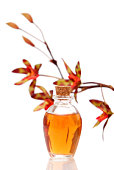
Aromatherapy has been around for some time now, manifesting itself in different forms in different civilizations. The Chinese and Indians used it as incense in temples while Egyptians used oils for embalming and other rituals. However, it was in the past few years that aromatherapy has started being seen as a science, and ancient art.
Most people are of the impression that aromatherapy is the therapy from aromas. However, there is more to this than just that. In aromatherapy, essential oils from plant parts like flowers, leaves, roots, stems and rinds of fruits are used. Though these oils are not 'oily' to touch, they are miscible in oil, to produce their oily nature.
As they are very volatile, they emit a strong aroma with many chemical compounds.
There are many uses and benefits of aromatherapy ranging from mental to physical ailments. It is most often used to control stress where lavender oil is usually used. There are some essential oils that are antibacterial and antifungal in nature, and are used on the skin.
Such a form of oil is tea tree oil. How essential oils really affects the body is not known, but it should be related to the complex chemical structure of its essential oils. The body is capable of absorbing these oils through inhalation or massage.
Aromatherapy is utilized through direct inhalation, in personal products like soaps and creams, steam inhalation with the help of a vaporizer and in a clay pot diffuser.
It is also effectively used through massage with carrier oil and a lamp ring diffuser. You can also find many aromatherapy candles in the market that release essential oils when burned; thus acting similarly to a diffuser. Essential oils are also used while bathing where a few drops of essential oil are added to bath water to be mixed vigorously. While bathing, the skin both inhales the aromas and absorbs its compounds through the skin.
Though aromatherapy can be easily stuck to, it does not necessarily mean that it is safe. As essential oils have powerful and toxic ingredients, they have to be used with care. This is why most of the essential oils should not be used directly on the skin; it has to be diluted else it irritates the skin. Moreover, under no circumstances should a majority of the essential oils be swallowed.
So when handling essential oils, remember that less of it is more than enough. Only a few drops are sufficient; for more drops may increase the strength of the essential oil and at the same time produce deleterious effects. You also end up only wasting these beautiful, expensive essential oils.
Essential Oils And Aromatherapy
The age-old Aromatherapy is being revisited again. Thanks to the recent revelation of properties of Pure Essential Oils and Message Oils that go into making the ingredients of Aromatherapy. Now-a-days you may find small bottles of essential oils in the modern groceries, health stores, and even in stationeries. Those who have experienced the power of essential oils know how wonderful can be their effects. That is why the benefit of Aromatherapy is spreading across the globe by words of mouth.
So, should you go for Aromatherapy? Yes, of course, but after having some knowhow of this special discipline of therapy. If you don't have some knowledge of it, you might be cheated by quacks with fake products such as synthetic scents.
Aromatherapy is a form of alternative medicine that uses plant materials, especially essential oils, some message oils, some absolutes, phytoncides, herbal distillates, infusions, carrier oils and other aromatic compounds that have properties to influence human mood and health. Some of the Aromatherapy Oils are standardized by FCC (Food Chemical Codex). But the best tool to determine Pure Aromatherapy Oil is an experienced and educated nose.
Generally, therapeutic grade essential oils are undiluted, but owing to the lack of regulatory bodies, aromatherapy industry takes advantage selling non-standard products and services. They often make misleading claims about the origin, manufacturing process and the nature of their products - essential oils and message oils.
Here is list of five tips that will help you buy Pure Essential Oils for Aromatherapy purpose.
1. Look for the phrase ?pure essential oil? in aromatherapy bottles. Don't believe the product the product if you see words such as fragrance, perfume, or even aromatherapy oil. None of these words has a standard legal definition.
2. Move on, verify the composition if it is natural or synthetic. You can test pure natural essential oil by placing a drop on absorbent paper. It will evaporate very quickly.
3. Also check the packaging. The pure aromatherapy oil is generally packed in dark amber or glass bottles.
4. Look for the scientific name of the essential and aromatherapy oil. For example, you will find ?lavandula angustifolia? written in case of pure lavender.
5. Finally, check for yourself - is your retailer trustworthy?
Both Tracey Mumford & Mahender Kumar are contributors for EditorialToday. The above articles have been edited for relevancy and timeliness. All write-ups, reviews, tips and guides published by EditorialToday.com and its partners or affiliates are for informational purposes only. They should not be used for any legal or any other type of advice. We do not endorse any author, contributor, writer or article posted by our team.
Mahender Kumar has sinced written about articles on various topics from Health, Essential Oils and Massage. Miles is a well-known author who writes on topics related to Aromatherapy Product Online, Aromatherapy Oils, Essential Oils Products,. Mahender Kumar's top article generates over 2400 views. Bookmark Mahender Kumar to your Favourites.
Analog Vs Digital Recording The transition has been a progression over a number of years and will leave no one in a compromising position!