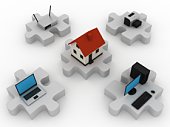
There are two types of firewall available to the home computer user. A hardware firewall is a device which sits between your computer and the internet. At home for example it could reside on a broadband router which is used to share your internet connection with a number of computers. One of the advantages of a hardware firewall is that it can be used to protect more than one computer at a time. For this reason hardware firewalls are deployed in corporate networks. For home users who own just one computer a personal firewall is more commonly used and more cost effective.
A personal firewall is a software application that monitors and can block the flow of data between the internet and your computer. The firewall is a key part of your computer security set up. It prevents hackers from gaining access to your computer using an internet connection.
Hackers gain access to your computer through open ports that are used by your computer to communicate with the internet. The most basic firewall programs, like Windows XP's firewall, monitor and can block “inbound” traffic by closing these ports. If theses ports are closed a hacker cannot access your computer directly via the internet.
More advanced firewall programs like products from ZoneLabs or Symantec also monitor and can block “outbound” traffic. This extra level of security is important and is worth investing in. For example, if malicious software like a Trojan Virus or spyware were installed on your computer without your knowledge the firewall would alert the user when it tried to connect to the internet and prevent it communicating with its host.
A firewall usually works at two basic levels. Firstly, packets of data are analysed based upon IP address and content to see whether they comply with a set of rules which a user can input to. The second level the data is analysed is at the application level. The firewall determines whether an application can send and/or receive data and the port which it should be communicating through.
The firewall “learns” through continuous interaction with the user. It seeks user approval from programs when they first come in to contact with the firewall. Most firewalls also allow the user to allow or block applications through a stored list of program which can be accessed through the firewall's user interface.
There are a number of sites which will help test your firewall's effectiveness. A number of these sites are run by security software vendors so it is recommended you test using an independently run site to double-check any results. One of the best independent test sites is run by The Gibson Research Corporation. They offer a free test called “Shield Up!” which can be found at their website - http://www.grc.com. The test checks a number of well-know and vulnerable ports on your computer and then provides some useful additional information to help improve your security while online.
It is important to remember that the firewall is only part of your computer security and does not negate the need for a good anti virus solution, a spyware removal tool and a degree of caution / common on sense on the type of websites a user visits. For example, the firewall will not scan for viruses or remove them from your computer.
How To Protect Computer From Hackers
Do you enjoy using the internet to socialize with friends or to shop online? If you do, you may consider yourself somewhat computer savvy, but you may be unsure of many computer terms and technicalities, especially those concerning computer viruses and other malicious files. In the past, this uncertainty was acceptable, but today, it may result in damage to you or your computer.
Today, one of the biggest concerns associated with computers and internet use is that of computer viruses. Computer viruses can infect and damage your computer in more ways than one. For example, your computer mail outright fail, you may lose valuable data stored on your computer, or you may find yourself a victim of identity theft. That is why all internet users, no matter how little or often the internet is used, are encouraged to familiarize themselves with these potentially dangerous files.
As previously stated, computer viruses should be a concern of yours if you use the internet. Unfortunately, many novice internet users do not realize that computer viruses and other harmful files come in a number of different formats. These formats include traditional viruses, worms, and Trojan Horses. Although each of these should be a concern of yours, you will want to take the time to familiarize yourself with Trojan Horses, as they have the potential to cause much harm.
Trojan Horses do not multiple or replicate themselves, like many other computer viruses and worms, do. With that in mind, they are still very dangerous to your computer and possibly even your finances. Trojan Horses are dangerous in the fact that they disguise themselves as “good,” computer files and programs. Once triggered, the results can not only be frustrating, but costly as well. The problem with Trojan Horses is that many are created to cause different types of damage. If a Trojan Horses is unleashed on your computer, you may find yourself missing important data, the victim of identity theft, or you may find it difficult to operate your computer in general.
Although Trojan Horses have the potential to cause great harm, there are a number of steps that you can take to protect yourself. For starters, it is important to examine your internet use. All internet users need to be careful of the websites that they visit and the files that they download. Many Trojan Horses come from email attachments and other unsafe computer downloads. By knowing the source of all information downloaded or viewed on your computer, you stand a good chance of never having to deal with the negative consequences of a Trojan Horse.
Another relatively easy way to protect your computer from a Trojan Horse is by keeping your computer's anti-virus software up-to-date. Perhaps, first it is important to make sure that you are using anti-virus software. If so, be sure that your software is set to automatically scan for viruses, as well as automatically update all terms and definitions. This can help to protect your computer from a Trojan Horse with little or no work on your part. Also, be sure to examine your computer's firewall settings. Constant notifications of potentially dangerous files may get tiring after awhile, but a high firewall setting can provide you with invaluable protection.
Now that you are familiar with Trojan Horses, how to prevent them, as well as the damage that they can cause, you have the best line of defense; knowledge.
Both Richard Rogers & Gabriel Adams are contributors for EditorialToday. The above articles have been edited for relevancy and timeliness. All write-ups, reviews, tips and guides published by EditorialToday.com and its partners or affiliates are for informational purposes only. They should not be used for any legal or any other type of advice. We do not endorse any author, contributor, writer or article posted by our team.
Buy House With Pool Fireplaces and swimming pools can also be included to add the value of the resale property. So, factor to be considered properly in the resale value