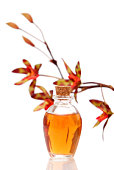
Essential oils are the pure essence of a plant or herb. However, it is difficult to rule out the presence of pesticides in the so-called pure essential oil, particularly in the age where pesticides form an important constituent of farming. A conclusion thus follows that the essential oil derived from such raw materials may not be as effective for ones purpose; resulting into side effects at times. The craze for organic essential oils springs from the concern for ones safety while using essential oils.
Organic essential oils are manufactured from plants and herbs that have been grown without pesticides. Organic farming coexists with the natural systems rather than dominating them. In the process, the farmer is able to sustain and build soil fertility, reduces pollution and overall becomes a crusader to protect environment.
Pesticides are not the only component that the organic essential oil must be rid of. The farmers must take steps to preserve the soil quality of the land. This will result into enzyme-rich and therapeutically viable raw materials. Using these techniques ensures that the organic essential oil is alive and active.
If compared to the essential oils derived from non-organic elements, one will find that the organic essential oils outscore them. The quality of organic essential oils taken as a whole, curative benefits and aroma are always superior to the non-organic oils.
Thanks to the several certifying agencies, buyers can escape the unscrupulous activities that are going on in this industry. One can easily be duped into taking a non-organic essential oil in place of the organic essential oil. ECOCERT International certified organic essential oils are considered of a good quality through out the world. Soil Association in the UK certifies organically manufactured essential oils.
However, certification of a few oils is difficult. An example of this is the Boswellia tree resin, which is the raw material for deriving frankincense essential oil. It is difficult to certify the essential oil derived from this because it is grown only in wild conditions. In such cases, if the manufacturer is able to source raw material from the actual location, it will be deemed to be grown without pesticides or insecticides.
When shopping for organic essential oils, the buyer must look for terms such as 100% natural or 100% biodegradable. Only the manufacturers of organic essential oils can use the terms or phrases. Another thing to look for when shopping for organic essential oils is its ingredients. If the list of ingredients reveals fragrance oils, artificial colors or synthetics, it is not organic essential oil.
Organic essential oils are available in sizes of 5ml, 10ml and 15ml. Expensive oils come in sizes of 2ml and 1 dram. It is very important to store essential oils in good conditions. Rather than using clear glass bottles, it will be advisable to use dark amber or cobalt blue bottles. These bottles do not allow sunlight to pass through and thus prevent deterioration of organic essential oils. To prevent temperature fluctuations and sunlight to contaminate the oils, the user can purchase or get special wooden boxes constructed to store the essential oils.
Cost of organic oils is more. This is because the cost of producing via organic means is more. However, an essential oil with little or no therapeutic value (for which the buyer chiefly purchases the oil) is of no use. All good things come at a price. The same applies to organic essential oils too. Buyers thus must not shy away from paying a small premium to get the pure essential oils.
Organic Essential Oils Wholesale
The body of evidence regarding the effectiveness of natural botanicals against a great variety of viruses is growing. Over twenty years ago, German scientists found extracts of more than 100 species of the Lamiaceae family to have antiviral effects. This discovery lead to and increase in the examination of essential oils in Europe for the treatment of viral infections.
Essential oils from many plant families have now been demonstrated to have antiviral properties. Interestingly, different plant families exhibit varying degrees of effectiveness depending on the virus strain. This is due to the particular molecular structures found in each type of oil, which penetrate physical entities to varying degrees (different tissues, cell walls, mucous membranes, etc). The effect on each virus strain depends also on the virus structure (enveloped, non-enveloped, molecular symmetry, etc.)
Certainly, one of the reasons for oils' effectiveness en vivo is their lipophillic character - essential oils are easily absorbed into mammalian tissues, where they may produce the greatest results. In fact, when studying the anti-viral effects of essential oils, researchers found that normal cells seemed to acquire a special resistance to viral penetration, though the mechanism for this effect is not yet known.
Melissa and the Herpes Virus: One of the Lamiaceae plants studied, Melissa (Melissa officinalis - also known as Lemon Balm), was shown particularly efficacious against the herpes virus (HSV). Doctor Dietrich Wabner, a professor at the Technical University of Munich, has even reported that a one-time application of Melissa oil led to a complete remission of HSV lesions. A cream medication for Herpes outbreaks, who's active ingredient is an extract of Melissa, is now sold in Germany under the name Lomaherpan. Use of Melissa essential oil itself may be just as effective - the oil can be applied directly to the lesions (or diluted to 10% in carrier if sensitivity is noted) to speed healing. Further occurrences can be prevented by applying oil to the area when sensations signal an eminent outbreak - repeating this protocol 3 or 4 times may cause total remission. Other essential oils found effective against the Herpes virus include bergamot, eucalyptus, lemongrass and tea tree.
Antiviral Components of Oils: The list of essential oils exhibiting antiviral effects is extensive: Melissa (as above), tea tree, juniper, eucalyptus, thyme, palmarosa, lavender, rosemary, clove, laurel, cinnamon bark, anise, rose, lemongrass, geranium, neroli, bergamot, clary sage, and dill. The antiviral effect of an essential oil is due to particular components of the oil - some oils will work just as effectively on a particular infection as another, because they contain similar amounts of a certain component. The components of essential oils showing antiviral activity, and the oils in which they can be found, are as follows (from K. Schnaubelt, Ph.D. - Advanced Aromatherapy, p. 36): Anethol - found in Anise Alpha-Sabines - found in Tea Tree, Laurel, and other oils Beta-Caryophyllene - found in Lavender, Rosemary, Thyme Linalool, and other oils Carvone - found in Dill Cinnamic aldehyde - found in Cinnamon Bark Citral - found in Melissa, Lemongrass and other oils Citronellol - found in Rose and Geranium Eugenol - found in Clove Gamma-Terpinene - Found in Juniper, Eucalyptus, Niaouli, Tea Tree and other oils Linalol - found in Lavender and Neroli Linalyl acetate - found in Clary Sage, Lavender, Bergamot and other oils.
Good studies of application of these essential oils in cases of illness are difficult to come by, as infecting people with viruses in the laboratory to subsequently be treated with aromatics would be a difficult process at best. The oils and components above have mostly shown effectivenessin-vitro, though tests also indicate that the anti-viral effect should occur in-vivo as well. As with Melissa, it has been HSV that has been most thoroughly examined, because of the relative simplicity of doing so. But there is nothing particularly special about the herpes virus, and proper oil/pathogen paring should prove as effective.
There are some noted case studies by professional aromatherapists. Of importance in these studies is the oil/symptom relationship. Essential oils from plants of the Myrtaceae family - notably Eucalyptus Radiata and Tea Tree - and Ravensara (also high in Eucalyptol) seem to have helped in cases with respiratory symptoms. For the lower respiratory tract, Hyssop decumbens (from the same plant family as Melissa) has been of interest. Essential oils for such cases may be used either in a diffuser, being taken at regular intervals, or through massage, diluted in a carrier oil.
Because of the difficulty in many cases of illness in determining the exact virus type involved, more specific application cannot be given. Certainly, in cases of HSV, Melissa has been shown effective in a number of studies. For respiratory infections, Eucalyptus and Ravensara have been used with success, and can be safely used as an adjunct to regular medical care. These oils may support one's recovery on a physiologic level - essential oils also play a part in uplifting emotions, which may also speed healing, or at least improve mental outlook during the healing process. For such instances, one may simply find the essential oil or combination that one finds pleasant, calming, and/or uplifting. PLEASE NOTE: In no cases, however, should self-treatment with essential oils be used in place of professional medical care where signs/symptoms of infectious illness are present.
Both Bryan Josling & Michelle Allen Cech are contributors for EditorialToday. The above articles have been edited for relevancy and timeliness. All write-ups, reviews, tips and guides published by EditorialToday.com and its partners or affiliates are for informational purposes only. They should not be used for any legal or any other type of advice. We do not endorse any author, contributor, writer or article posted by our team.
Michelle Allen Cech has sinced written about articles on various topics from Essential Oils. More information is available on essential oils at The Anan. Michelle Allen Cech's top article generates over 720 views. Bookmark Michelle Allen Cech to your Favourites.
B 52 Dropping Bombs It would have to be the PW2000 series engine. At least it could share engines with the C-17