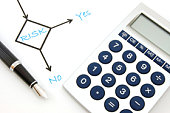
In the operation of each business, there would be an element of risk which could hamper its successful operation.
Risk Management deals with managing these risks affecting the business. It could be better defined as a planned approach for managing
Uncertainties which is related to a risk. It would include evaluation of risk, developing strategies to manage such a risk and reducing the effects of
that risk if that could not be completely avoided.
Risk management would involve using processes, methods and tools to manage these risks to reduce its adverse effects as much as possible. Risk management would naturally involve identifying the possible risk factors - the things which could go wrong, then find out which of these risk factors or threats are really important to be dealt with and then plan for handling those threats. If you are able to identify the possible threats involved and be prepared to handle those risks, it will be easier for you to handle such risks reducing its effect on your business.
You will face a number of risks while running any business. Therefore a proper risk management plan should be part of business plan to enable you to accomplish your business objectives without much difficulty.
A typical risk management program should cover:
1.Identify all the risk factors involved with your business activities systematically.
2.Assess these risk factors and find out which of them are most likely to occur.
3.For all the risk factors identified, make out a plan to respond to these threats properly.
4.Proper systems are to be established in your business to handle such risks.
5.Monitor your systems on a regular basis to see how effective your system has been to handle such risks and make any addition or alternation to the system to make it more effective.
By going through the process of establishing a risk management system in your business, you would able to achieve the following objective:
1.It would improve your planning and decision making process by setting priorities against each risk factor.
2.It would help you allocate your financial and other resources more efficiently.
3.As you are aware of different risks involved, you would be ready to handle such risks and no fire-fighting would be required to handle such threats. It will also help you to avoid disasters or big financial losses.
4.This will also help improve your chance of your achieving your business objectives in time and within budget.
Application of risk management would become more important while launching a new product or do something new.
Whenever a risk condition occurs, we could handle them four different ways:
1.By accepting the risk
2.By transferring the risk
3.By reducing its effect
4.By eliminating it completely
We may accept a risk, when the cost to get rid of it is very high. We may transfer the risk by insuring against such risks. We may reduce its effect by introducing some new safety procedures or get rid of it completely by changing your method of producing your products.
It must be understood that risk management is an ongoing process. For its successful implementation, it requires regular monitoring.
What Is Risk Management
Before I discuss the use of hedging to off-set risk, we need to understand the role and the purpose of hedging. The history of modern futures trading begins in Chicago in the early 1800s. Chicago is located at the base of the Great Lakes, close to the farmlands and cattle country of the U.S. Midwest making it a natural center for transportation, distribution and trading of agricultural produce. Gluts and shortages of these products caused chaotic fluctuations in price. This led to the development of a market enabling grain merchants, processors, and agriculture companies to trade in contracts to insulate them from the risk of adverse price change and enable them to hedge.
The first commodity exchange was the creation of the Chicago Board of Trade, CBOT in 1848. Since then, modern derivative products have grown to include more than the agricultural industry. Products include Stock Indices, Interest Rates, Currency, Precious Metals, Oil and Gas, Steel and a host of others. The origins of the commodity and futures exchange was created to support hedging. The role of speculators is beneficial as they add trading volume and important volatility to what would otherwise be a small and illiquid market place.
A bona-fide hedger is someone with an actual product to buy or sell. The hedger establishes an off-setting position on the futures or commodity exchange, thereby instituting a set price for his product. Someone buying a hedge is known as being Long or Taking Delivery. Someone selling a hedge is known as being Short or Making Delivery. These positions known as Contracts are legally binding and enforced by the exchange.
Entering your trades either for speculation or hedging is done through your broker or Commodity Trading Advisor. Commodity and Futures exchanges are distinct from Stock Exchanges, although they operate using the same principals. They are regulated by different agencies such as the Commodity Futures Trading Commission who are responsible for regulation of retail brokers in the USA as well as Commodity Trading Advisors who are really Portfolio Managers for derivatives.
Now lets view some real life examples of hedging or mitigation of risk by using exchange traded derivatives.
Example 1: A mutual fund manager has a portfolio valued at $10 million closely resembling the S
Both Jessica Thomson & Ben Needles are contributors for EditorialToday. The above articles have been edited for relevancy and timeliness. All write-ups, reviews, tips and guides published by EditorialToday.com and its partners or affiliates are for informational purposes only. They should not be used for any legal or any other type of advice. We do not endorse any author, contributor, writer or article posted by our team.
Ben Needles has sinced written about articles on various topics from Business Credit Cards, Anger Control and Business Credit Cards. About the Author (text)Dwayne Strocen is a registered Commodity Trading Advisor specializing in analyzing and hedging Market and Operational Risk using exchange traded and OTC derivatives. Website:. Ben Needles's top article generates over 550000 views. Bookmark Ben Needles to your Favourites.
Art From Ancient Greece Thats why the theory of the Four Elements, as old as it is, still has so much relevance to our lives today.? 2005, Eric Garner, ManageTrainLearn.