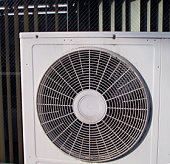
Someone selling an air conditioner would try to convince you at any cost that you must buy an air conditioner and for that if he has to tell a few half-truths or even lies, he would do that. Thing is you should know beforehand so that you can't be sold a bluff. One such point is the dehumidifying capacity of air conditioners. While air conditioners do dehumidify, their primary purpose is to make the environment comfortable.
For the job of dehumidification we have refrigerant dehumidifiers. The compressor of a refrigerant dehumidifier is rated at anything between 13000 and 15000 BTU. In place of that, a residential central air system has a compressor rated at 30000 BTU or higher. The air conditioners used for commercial purposes have even higher ratings. Now with such high ratings and over 50% of the energy being expended by air conditioners in dehumidification, they are apparently good agents of dehumidification.
But there is more to it. In case of a refrigerant dehumidifier, subject to the surrounding conditions, the temperature of the evaporator coil is about 20 to 30 degree Fahrenheit below the dew point temperature of the surrounding air which is at about 28 degree Fahrenheit. However, when we are talking about an air conditioner the equation changes. An air conditioner's evaporator coil would only be 10 to 14 degree Fahrenheit colder than the surrounding air. The theory is that, the more a coil is cold, thee greater the moisture vapor that will be removed from the air. What this means is when a dehumidifier is able to dehumidify a space in 24 to 36 hours, an air conditioner will take much longer.
There are also the evaporative coolers which are extensively used in the dry climates of the desert and mountain regions of the western United States. The evaporative coolers, as the name suggests uses evaporation to cool the air. The result is that the humidity increases in the air. So, if anyone plans to buy an evaporative cooler, thinking it will also solve is dehumidifying problem, he should think again. In fact a dehumidifier and an evaporative cooler shouldn't be used together as the cooler will nullify the effects of the dehumidifier.
So, it must be understood that air conditioners are made to maintain a comfortable temperature indoors when the outdoors are unpleasant. In the process it might dehumidify the rooms. But that certainly is not what it is meant to do.
Air Conditioner And Heating
The natural order of things would normally mean that when something is cool, and the air around it is warm, it will also become warm.The seasons sunrooms and furniture "http://www.allsunrooms.com/fourseasons.html">four seasons sunrooms and furniture. Air conditioning systems take advantage of the laws of science to make something out of the ordinary happen: even though the air is warm, with air conditioning, you can have a cool house. And you don't even have to be scientific to make this happen, or even to keep it happening. Air conditioner maintenance is really very simple.
Most air conditioning problems come from clogged systems. There may be any number of reasons for this, but usually the reason is a drain line that is dirty.
Just compare the drain lines in your air conditioner to your arteries. We all know that clogged arteries lead to a heart attack, so if you don't want your air conditioner to have an attack, that is, stop functioning, make sure you keep these lines clear. Here is how: The air conditioning system has two main parts, the drain line and the condensate pan. When air conditioners cool the air in your home, they also take the moisture out of the home. This moisture is carried by the cooling coil into the drain line. The moisture that is carried off has a lot of different materials in it, such as minerals, mildew and dust. When these accumulate, the line becomes clogged. If you want to keep your air conditioning system humming, clean out the condensate lines at least once a quarter to make sure the fluid continues to flow through. This can be done with a coil cleaner made for that purpose, and a wire brush.
Another way to keep the system purring is to keep the filters on the air conditioner clean. Modern air conditioners have anti-microbial filters, so they trap mildew, mold and algae that may build up. This is good for your lungs, but bad for the filter. Change you filters once a month so that they are clear and clean and can do their job. The air in your home will stay clean and clear of these allergens and reduce medical problems. It will also prevent the house from being as dusty. If you have any allergy sufferers in your home, these are important features of the air conditioning system.
All air conditioning systems have spots where moisture builds, and these become depositories for mildew, mold, algae and dust. You can fight this buildup by spraying with a mild disinfectant if you do if often, but once the buildup is too great, you may have to have a professional do a thorough cleaning. If you want your air conditioning motor to stay in top form, follow the instructions to keep it clean. This will also keep the levels of algae, mildew and mold that can build up in the system at a minimum. Less dust will also be strewn around the house if the system is kept clean.
If anyone in your home has allergies, these allergies are being aggravated by pollen, dust mites and other allergens that are carried in the air. These family members will thank you for the cleaner air in the home.
Even if you do keep the unit clean, it is sometimes impossible to get rid of all pollutants. Air conditioners naturally carry moisture, and that is an invitation for algae, mold and mildew to accumulate. When too much of it accumulates, you may have to call in a professional to address the problem. But normally, just spraying a household disinfectant into the filter intake will allow the system to circulate it and eliminate this problem.
Keeping the unit functioning well mechanically is also important. You should put a small amount of oil specified for electric motors into the oil ports at least annually. When you have the system apart to do this, you should make sure that the fan for the blower motor is not caked with mildew or mold. As we stated, air conditioners take in warm air, cool it down and then expel the cool air into the house. (Obviously, warm air is then expelled outside the house.)The temperature in the ducts should be at least 15 to 25 degrees colder than the air inside the home. It will warm a bit before it is expelled. If you don't have this difference (you can check the temperature in the ducts with a stem or electron wire thermometer), check your filters, circuit breakers, lines, etc. The temperature difference should not be too small. If it is a problem you cannot find, you will have to call in the pros.
Both Jason Uvios & Adam Peters are contributors for EditorialToday. The above articles have been edited for relevancy and timeliness. All write-ups, reviews, tips and guides published by EditorialToday.com and its partners or affiliates are for informational purposes only. They should not be used for any legal or any other type of advice. We do not endorse any author, contributor, writer or article posted by our team.
Jason Uvios has sinced written about articles on various topics from Air Purifier Cleaners, Acne Treatment and Food Enzymes. Jason Uvios writes about on Difference between an Air Conditioner and a Dehumidifier to visit :- window air conditioner,. Jason Uvios's top article generates over 165000 views. Bookmark Jason Uvios to your Favourites.
Adam Peters has sinced written about articles on various topics from Bathroom Home Improvement, Exhaust and Home Management. Adam Peters is the editor of different articles with reference to home air conditioning maintenance made easy for http://www.allsunrooms.com . A focused website that offe. Adam Peters's top article generates over 823000 views. Bookmark Adam Peters to your Favourites.