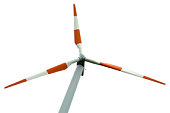
Not receiving an electric bill while enjoying the advantages of the modern electrically-driven lifestyle is a wondrous feeling.
Electric bills and fuel bills are rising steadily but the cost of wind turbine energy is zero, and the cost of installing and hooking up a turbine is steadily coming down as demand rises and more commercial success is realized by various companies producing the turbines and researching technologies to make them ever more efficient.
In addition, people are moving away from the traditional electric grids and the fossil fuels for personal reasons including desire for greater independence, the desire to live remotely or rurally without having to "go primitive", political concerns such as fears of terrorist strikes on oil fields or power grids, or concerns about the environment.
Again, this motivation to get away from the traditional energy sources is the same one that causes people to seek the power of the wind for their energy, giving more business opportunities to profit from wind turbine production and maintenance, which drives their costs down for the consumers.
In nearly thirty states at the time of this writing, homeowners who remain on the grid but who still choose to use wind energy (or other alternative forms) are eligible for rebates or tax breaks from the state governments that end up paying for as much as 50% of their total "green" energy systems' costs.
In addition, there are 35 states at the time of this writing where these homeowners are allowed to sell their excess energy back to the power company under what are called "net metering laws". The rates that they are being paid by the local power companies for this energy are standard retail rates-in other words, the homeowners are actually profiting from their own energy production.
Some federal lawmakers are pushing to get the federal government to mandate these tax breaks and other wind power incentives in all 50 states. Japan and Germany already have national incentive programs in place. However, "A lot of this is handled regionally by state law. There wouldn't really be a role for the federal government," the Energy Department's Craig Stevens says.
And as might be imagined, there are power companies who feel that it's unfair that they should have to pay retail rates to private individuals. "We should only have to pay you the wholesale rate for your electricity," according to Bruce Bowen, Pacific Gas & Electric's director of regulatory policy. However, the companies seem to be more worried about losing short term profits than about the benefits, especially in the long run, of the increased use of wind turbines or wind farms.
Head of the Center for Energy Efficiency and Renewable Technologies of California vs John White points out, "It's quality power that strengthens the grid."
Alternative Energy Source Wind Power
More and more scientists today agree that global warming is a serious issue and that the cause of global warming is carbon dioxide released into the atmosphere when fossil fuels are burned. Politicians, too, are being swayed as they see increases in property damaged, injuries, and even deaths due to natural catastrophes which appear to have gotten worse in recent decades.
Because fossil fuels appear to be the source of worldwide atmospheric change, people have began to look to other methods of producing energy. In addition to causing atmospheric change, there's the reality that we will run out of fossil fuels. The world's economy is based on fossil fuels but they are a finite resource. Eventually we will run out of them. Fossil fuels are not a sustainable resource. Two methods of producing energy which have little impact on the environment and are sustainable are solar and wind power.
First, we'll take a look at solar power. Solar power is, of course, power derived from the energy of the sun's rays. The limitation with this energy source is the sun itself. The sun will never run out, except at night. Solar power sources have been designed to compensate for the downtime of night or cloudy days, but solar power works best in sunny climates.
Solar power is generally used in one of three ways: to generate heat, to generate electricity, and to desalinate salt water. Solar powered heating systems are usually either active or passive in design. An active solar heating system uses pumps to circulate water which has been heated by the sun. Passive solar heating systems use the nature of water to create circulation. This method relies on the fact that heat energy wants to move into areas of lesser heat.
In generating electricity, solar power is harnessed by photovoltaic cells which convert the suns energy into electricity. These cells have been widely used to power calculators for decades. In solar desalination, the power of the sun is used to evaporate water to separate it from the salt and other undesirable minerals.
Another type of clean, renewable power comes from the wind. Wind power, while growing in popularity, still accounts for barely 1% of the world's power supply. This is hard to believe considering how much the wind blows! Wind power is usually harnessed using wind turbines.
A centuries old version of harnessing wind power is the windmill. These lovely structures used the wind to grind grains and pump water. Today's wind turbines are advanced machinery employing the latest technologies.
More and more "wind farms" are sprouting up around the world. These huge arrays of wind turbines can be found on land and offshore. The biggest ones in the US are land-based farms in California, Oregon, and Washington. There are also more and more popping up the Midwest. Because of energy costs and damage done to the environment, alternative energy sources are receiving a great deal of interest. Two of the most promising are solar and wind power.
Both Darren Bardsley & Gregg Hall are contributors for EditorialToday. The above articles have been edited for relevancy and timeliness. All write-ups, reviews, tips and guides published by EditorialToday.com and its partners or affiliates are for informational purposes only. They should not be used for any legal or any other type of advice. We do not endorse any author, contributor, writer or article posted by our team.
Gregg Hall has sinced written about articles on various topics from Lingerie, Desserts and Mortgage. Gregg Hall is an author living in Navarre Florida. Find more about this as well as science books at. Gregg Hall's top article generates over 3350000 views. Bookmark Gregg Hall to your Favourites.
Bank Account After Death I process over 75 of my transactions on my personal merchant account. Good Luck with your Business,Brent Crouch