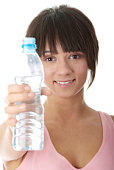
Water, water everywhere but not a drop to drink. You feel you have heard it before, recollecting those horror scenes showing victims of earthquakes, tsunamis, torrential rain and flood. No. It is the mantra of everybody - From Australia to Iceland, from Hawaii to Sanfrancisco people are scared to drink water directly from any source. Bottled water carries a declaration that it is 100% pure and free from bacteria and other harmful substances, and is accepted by us as safe to drink.
Our body's demand for water is called thirst. It is quenched by an intake of water.
Is pure bottled water needed? Why not some salts and minerals? Why remove the life saving minerals through osmosis? Many authorities, doing research in human health questions the habit of drinking pure water. They say leeching of minerals through osmosis is not needed and not natural. Is our body genetically designed to accept pure water? Is pure water good for our health? These are the questions many scientists ask now.
Pure bottled water is one of the biggest businesses in many developing countries now. The populations of these countries which used to carry their drinking water (mostly drawn from the communal wells) or drink directly from the water taps in railway stations are brain washed to think only pure water in bottles are fit to drink.
Even the people in developed countries cultivated their bias against water available from various sources in public places only a couple of decades ago.
Sustained researches about communities drinking a special source of water such as the fabled Hunza water shows that the citizens of Hunza lived up to 150 years drinking this water. Various studies points towards water for the longevity and other traits found in Hunza.
It is not only the fabled Hunza but also the springs of Lourdes, the well of Mexico, the Nordeneau Caves in Germany and the Indian Nadana springs are found to be undergoing ionization process naturally during its passage through earth. These waters are found to be one of the greatest antioxidant full of hydrogen and negatively charged. So water with various minerals is proven to be beneficial to the human body.
Arguments for and against pure bottled water will continue to rage as along as our body's demand for fluid continues. Depending upon the results of the ongoing researches, opinions for and against bottled water will continue to flourish without any end.
For more info visit http://www.purebottledwateronline.info
Bottled Water Is Bad
While the benefits of drinking water are undeniable, experts are only now adding up the impact of all those billions of plastic water bottles on the environment, from the energy used in production to the cost of transportation and the handling of plastic waste. Nearly 90 percent of water bottles are not recycled and wind up in landfills where it takes thousands of years for the plastic to decompose. Each year over 1,051,200,000,000 Plastic water bottles are dumped in garbage in the United States. If you're going to break the plastic habit more slowly, please know that one-time use water bottles are not intended for refilling. Water bottles are not safe for water consumption, more and more
studies reveal.
Plastic bottles are easy to carry, refill and to throw away. Plastics frequently wind up polluting our oceans and waterways, and are very
harmful to the sea birds and other marine life that get entangled in plastic bags, fish net remnants etc. From there they are finding their way to the shores of island communities and coastal countries that are themselves only just beginning to experience the problems associated
with plastic beverage bottle waste. Worse yet, plastic bottles leach chemicals into water. If you taste plastic, you are drinking it, so get
yourself another bottle.
Are plastic water bottles a health hazard. Buying bottled water is not a long term sustainable solution to securing access to healthy water. Bottled water may be no safer, or healthier, than tap water in many countries while selling for up to 1,000 times the price. the World Wild life Fund said. Health advocates also recommend not reusing bottles made from plastic #1 (polyethylene terephthalate, also known as PET or PETE), including most disposable water, soda and juice bottles. Health risks are posed from all plastic bottles except those made from #2 (HDPE), #4 (LDPE) and #5 (PP). And, as a rule, bottled water is no safer or healthier than the H2O that flows from municipal water systems.
The energy we waste using bottled water would be enough to power 190,000 homes. Not only do they contribute to excessive waste, but it costs us a thousand times more than water from our faucet at home, and it is, in fact, no safer or cleaner. In addition to the millions of gallons of water used in the plastic-making process, two gallons of water are wasted in the purification process for every gallon that goes into the bottles.
Imagine how much money went just to cover expenses that are not related to water itself: packaging, transport from USA to Europe, waste disposal or recycling. So much waste is caused by bottled water, and most of us have perfectly good taps at home. And if people are so untrusting of tap, why not buy a filtration system that doesn't cause tons of waste in plastic.
Most of the bottled water are filtered from municipal water. After the coal has been moved, the water is filtered, bottled and sold to clueless
citizens. Filtering at the home for what we drink makes sense. I think the best option for healthy water is to get a whole-house filtration system if you are in a house, or sink and shower filters if you are in a condo or apartment, choosing based on what needs to be filtered out in your area. The arguments made for this include that, unlike tap water, bottled water uses up oil and other fossil fuels to be produced and shipped, fills up landfills, represents wasted money, and does not go through nearly as rigorous filtering and cleansing processes.
As more people become concerned about health, water filters are becoming an essential component of the home. Since the quality of water varies
depending upon its source, a variety of home water filters are available to meet your individual requirements. Under the sink water filters are typically used where cabinet space is available under the kitchen sink and a permanent installation is desired. Whole house home water filters or drinking water filters are goldmine.
Both Lucy Bartlett & P. Rodgers are contributors for EditorialToday. The above articles have been edited for relevancy and timeliness. All write-ups, reviews, tips and guides published by EditorialToday.com and its partners or affiliates are for informational purposes only. They should not be used for any legal or any other type of advice. We do not endorse any author, contributor, writer or article posted by our team.
Lucy Bartlett has sinced written about articles on various topics from Home Improvement, Family Concerns and Cruises. Lucy Bartlett is a proud contributing author. Find more articles here. For more info visit. Lucy Bartlett's top article generates over 165000 views. Bookmark Lucy Bartlett to your Favourites.
P. Rodgers has sinced written about articles on various topics from Cancer Prostate, Lose Weight and Nutrition. Paul Rodgers specializes in marketing online fitness, diets, health and beauty products and services. You are invited to visit the followings Websites. P. Rodgers's top article generates over 33100 views. Bookmark P. Rodgers to your Favourites.
Calculation Of Cash Flow It is as if you are turning all of your term invoices into COD without taking away your terms to the customer.Thanks for reading