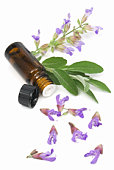
One of the nature's greatest gifts to mankind is the magical properties of Aromatherapy essential oils. Its existence is considered to be very ancient, with a history of 3500 years. Latest research has only recently shown what aroma therapists have known for many ages: 'what we smell has a direct impact on how we feel.'
Aromatherapy is defined as the use of pure, therapeutic grade essential oils to facilitate the health of body, mind and spirit.
It is an all encompassing treatment which incorporates the senses of touch and smell. The pleasurable scents of the oils work to relieve stress, and comfort the mind, balance emotions and treat numerous physical ailments.
They contain the aromatic molecules of the plant. This product can be used for therapeutic, emotional, physical and/or spiritual relief. Many use this product in meditation for spiritual awakening. Others use it for its soothing affect on sore muscles, or if they are stressed out and just need to take their senses on a journey. Aromatherapy is a natural way of curing disorders of many kinds whether physical, spiritual or mental. There are numerous products of aromatherapy that can be used for relaxation such as candles, lotions, soaps, and many others. Essential oils are the ones that are most widely known.
What Can Essential Oils Do?
There are many ways that you can use aromatherapy to heal and enhance your life and how you incorporate it into your daily life depends largely on your personal preferences. Some people like to use aromatherapy candles or incense, and breathe in the scent of various fragrances to create a particular mood or environment. The scent is said to set off a chemical reaction in the brain, creating a mental state of relaxation. Other types of oils, salts and lotions can be used on the skin, creating the same relaxing effect except on a physical level. Others use aromatherapy as a way to look and feel younger and more vibrant.
These are extracted from different parts of plants and have numerous distinct uses. Some of them are used to treat acne, to strengthen the immune system, to relax muscles and to derive other such benefits. The aroma of these essential oils greatly stimulates the senses and the mood of an individual. There are aromatherapy oil burners and aromatherapy diffusers that can be used to fill entire rooms with the aroma of these essential oils. The aroma gives tranquility of mind and rejuvenates the mind, body and soul of an individual. Essential oils evaporate quickly and should not be left in the open.
Essential oils should be stored away from harsh lighting or sun, in a cool dark area away from heat. Do not leave uncapped as they are highly volatile and evaporate easily.
Essential oils are not intended for use in treatment for specific medical conditions. For treatment of health ailments, please seek diagnosis and recommendations from a licensed practitioner.
Chamomile German Essential Oil
Chemistry?!? Are your eyes glazed over yet? It happens...yet if you're interested at all in the therapeutic use of essential oils, a little primer on their chemistry can be very useful. Not only will you better understand how and why essential oils work, but the great importance of using natural, high-quality oils - oils that are pure, properly distilled, AND smell nice - will be made clear. It's not just an aromatherapy sales pitch; essential oils with exceptional bouquets have different chemical make-ups than flat or otherwise uninteresting oils. The differences can significantly affect the healing potency of therapeutic applications for you, your family and/or your clients. Much of the time, you can discern the difference of therapeutic value between two oils just by their aroma - one needn't always have the proof of fancy, expensive machines to make an educated choice.
So, why are essential oils called 'oils' anyway? They don't feel greasy, and they tend to evaporate completely, unlike common 'fixed' oils (such as olive, grapeseed, hazelnut and the like). Essential oils and fixed oils share a similar chemical foundation: their structures are based on the linking of carbon and hydrogen atoms in various configurations. But this is really where the similarity ends. Fixed oils are made up of molecules comprised of three long chains of carbon atoms bound together at one end, called a triglyceride. Every fixed oil is made up of just a few different triglyceride arrangements - olive oil, for example, is primarily made up of oleic, linoleic and linolenic acids (the names of particular carbon-hydrogen chains forming the triglycerides). Their long-chain shape holds them in a liquid state which does not easily evaporate.
Essential oils are 'volatile' oils - oils that DO easily evaporate. Their chains of carbon atoms to which the hydrogens attach are not as long or heavy, and are much more complex. Many essential oil structures are not really chains, but ring, or multi-ringed shapes with diverse sub-units - called 'functional groups' - sticking out in various directions. Like their fixed oil counterparts, essential oils are lipophillic - meaning 'fat liking'. The fat-liking nature of both fixed and essential oils makes them easily absorbed by our bodies. Because of their typically smaller structures however, essential oils are absorbed more rapidly than fixed oils, and can easily penetrate deep into the body. Despite their plant origins, this lipophillic nature of essential oils makes their profound healing action on the human body possible.
Most of the therapeutic activity of an essential oil can be attributed to the functional groups of the individual chemicals that make up the oil. There can be over a hundred identifiable molecules in one essential oil. Each of these molecules, as mentioned earlier, is a chain or ring (or multiple-ring) structure of carbon atoms linked together with hydrogen atoms bonded to them in various configurations. Every chain or ring has a functional group attached - a functional group is defined by Salvatore Battaglia in 'The Complete Guide to Aromatherapy' as: "a single atom or group of atoms that...has a profound influence upon the properties of the molecule as a whole. It is often referred to as the chemically active center of the molecule".
As you can see, essential oils are really very complex in their chemical nature. There are nearly infinite possibilities of functional group and ring or chain combinations. And ONE essential oil alone can be made up of HUNDREDS of these different molecular arrangements. Don't worry, though! While it sounds complex, one needn't know all the precise chemical details to use essential oils therapeutically. When selecting between varieties of an essential oil, It IS helpful to know that any particularly oil is often composed of one or more primary molecular forms, with many minor or 'trace' constituents, and that ALL these molecules contribute to the oil's aroma and therapeutic action.
The best natural, undiluted, properly distilled essential oils with all the major and minor chemical constituents will have the finest aromas AND the most potent therapeutic action. Many factors in an essential oil's production affect the total number and relative amounts of individual chemicals found in the final product. These include where the plant was grown, soil and climate conditions, time of harvest, distillation equipment, plus the time, temperature and pressure of distillation. This can give you an idea as to why two varieties of the same oil can smell so different: The full, beautiful bouquet of a fine essential oil will contain a myriad of notes, telling you that all natural components are present and in balanced amounts.
To best understand this, we'll examine Lavender essential oil; more than fifty individual molecules have been identified in pure lavender essential oil. The aromatherapist must remember that ALL of these chemicals found in pure and natural lavender oil work together to produce a therapeutic effect. For example, the linalool molecule is antiviral and antibacterial; the linalyl acetate is emotionally calming; other major components including cineol, limonene, pinene and others are all noted for specific biologic and aromatic activity. It is the combined, balanced, synergistic action of these chemicals that make pure, high-quality lavender such a great healer. No one chemical can be singled out and used to give the same profound results as the complete pure essential oil.
What does this mean to the lay-practitioner? That it's important to find a nice smelling lavender oil! Each of the individual chemicals has a distinct smell, talked about in terms of 'notes' within the overall lavender aroma. Some of these are sweet, some citrusy, some are herbaceous, and some can be camphorous. A precise amount of each will create a certain lavender aroma. Some lavenders are more sweet (and therefore more relaxing), others are more herbaceous (and more anti-microbial). Three important points should be noted regarding selecting by aroma: First, there can be significantly different aromas from the same species of plant, even when the essential oils are of the highest quality. You can often use your intuition to select the best variety for your needs (as between the sweeter more relaxing, or the herbaceous more 'medicinal' lavenders). Sedond, some plants (e.g. Rosemary and Thyme) have chemotypes - this specifies a predominant chemical in the essential oil - each being used for a certain therapeutic application. Know which chemotype is best suited to your needs before making a selection. Finally, it is most often the essential oil that smells the most 'true' to you that will be the most beneficial. Your senses can naturally detect what is good for you and what is not, if you're willing to listen to them impartially.
All essential oils are subject to similar variations in production methods or the manipulation of their molecular make-ups through the addition of synthetic chemicals. For the most therapeutic benefit, it is always best to use true, carefully-made essential oils. To do this, find a source that is dedicated to supplying only the highest grades of oils. Examine their product's aromatic quality and business practices and so that you are comfortable with their dedication to your health, not just their bottom line. Listen to your intuition and your own nose; they won't lie to you! With experience, your ability to discern between subtly different grades of oils will become more astute. With even more education and skill, you'll start to recognize individual chemicals within an oils aroma, and make the best decisions as to which oils will have the most profound therapeutic affects for you, your family, or in your professional practice.
Both Alien & Gail Melon are contributors for EditorialToday. The above articles have been edited for relevancy and timeliness. All write-ups, reviews, tips and guides published by EditorialToday.com and its partners or affiliates are for informational purposes only. They should not be used for any legal or any other type of advice. We do not endorse any author, contributor, writer or article posted by our team.
Alien has sinced written about articles on various topics from Pregnancy Problems, Fitness and Get Rid of Bed Bugs. Read more on Punk hairstyles. Check out for skin care. Alien's top article generates over 673000 views. Bookmark Alien to your Favourites.
Gail Melon has sinced written about articles on various topics from Essential Oils. The author is an aromatherapist with Ananda Aromatherapy. Find more resources on. Gail Melon's top article generates over 720 views. Bookmark Gail Melon to your Favourites.
Advanced Dermatology And Cosmetic Surgery You are choosing to make your body and yourself better. Other people will respect you for being proactive, so encourage yourself by respecting the changes you are reaching for.