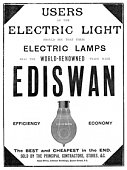
The average incandescent bulb based on filaments emits 12-15 lumens per watt (a measurement of the bulb's lighting output). While compact fluorescent bulbs currently available on the market emit 60 lumens per watt with projected outputs of 65-120 lumens per watt in the works for the future. The proposed bill will require all bulbs sold in the US to emit no less than 60 lumens per watt by January 2012.
Many people are opposed to this bill, feeling it will force consumers to purchase the more expensive product for their light fixtures and lamps. These individuals do not feel the energy savings from the CFL bulb outweighs the cost of the product and believes individuals should have their choice of light bulbs. When purchasing light bulbs it is easy to figure the cost difference between incandescent bulbs (around $0.25) as compared to CFL ($2-5 each) while long term cost savings are a little more difficult to figure.
So what are the cost and energy savings that have some people singing the praise of the compact fluorescent bulb?
* CFL bulbs use two-thirds less energy than the traditional incandescent bulb to provide the same amount of energy. This is equivalent to $30 or more in savings on your energy bill over each bulbs lifespan.
* CFL light bulbs last ten times longer than standard incandescent bulbs.
* Compact fluorescent bulbs generate seventy percent less heat, resulting in a safer to operate light bulb and a reduction in home cooling costs.
* CFL bulbs also meet quality requirements which include ; instant on, no sound production, and the light produced falls within a warm color range.
* A CFL bulb can prevent more than 450 pounds of emissions from a power plant during its life. These power plant emissions are directly related to greenhouse gases, which pollute the environment and lead to global warming.
When replacing a incandescent light bulb with a compact fluorescent bulb there are a couple of things to consider. Frequently turning on and off a CFL bulb will shorten its lifespan. So if only replacing a few bulbs in your home replace those that remain on for longer periods of time, which are typically the most used rooms in your home. CFLs are also great for those hard to reach light fixtures such as ceiling pot lights, wall sconces, and chandeliers which you don't want to have to change as often. When replacing the bulb use this approximate sizing guide to select the correct wattage for your bulb.
Incandescent - CFL
40W - 9W
60W - 13W
75W - 20W
100W - 23W
CFL bulbs may cost a little more at the checkout, but they are quick starting, come in a variety of shapes, sizes, and light levels. You can also save money in the long run on your energy bill by using them and can spend less time in the dark changing bulbs. Plus CFL bulbs are still improving in output, quality, and style everyday to one day be an ever better product for all of your lighting needs.
Incandescent Fluorescent Light Bulbs
The incandescent light bulb was invented in about 1802. Practical incandescent light bulbs were not invented until 1878 when tungsten was used for the filament. In many respects the technology hasn't changed much after the initial refinements. First let me explain how an incandescent light bulb works.
How Incandescent Light Bulbs Work
Electricity goes through a thin strand of material called a filament. The material gives off light after it is heated in a process called incandescence. The filament is tightly would like a spring so that there is more length to give off light. Being enclosed inside a glass shell protects the filament. The excessive heat produced by the electricity would cause the filament to burn up if it were exposed to the oxygen in the air. Incandescent light bulbs are usually filled with an inert gas such as nitrogen to prevent the filament being exposed to oxygen. To better project the light outward a pear shaped bulb is usually used.
The Drawbacks of Incandescent Lighting
There are several drawbacks to incandescent light bulbs.
* Incandescent light bulbs use significantly more electricity than other light emitting bulbs such as fluorescent bulbs. Depending on the cost of your electricity, average savings for using fluorescent lighting for a comparable incandescent bulbs may be $60-$75 per year assuming 4 hours of usage a day.
* The incandescent bulb works by heating the filament. 90% of the energy used is converted to heat. For a few months in the winter you add heat to the house and its welcome. The other 9 months of the year its unwanted heat you will air condition or attempt to vent away. Remember the child's toy oven that baked cookies with nothing but a light bulb inside it? Also, when the incandescent bulb burns out you must wait for it to cool before you change it, or protect your fingers from being burnt.
* The quality of incandescent light is poor. Your eyes adapt to it, but uncorrected photographs show the yellowish orange cast given by incandescent light bulbs. Poultry farms avoid raising fowl under incandescent lights because it can cause self-destructive stress in the birds.
* Incandescent light bulbs have a relatively short life span. Many other light systems such as the fluorescent will last up to 13 times as long.
* The hazards of an incandescent bulb breaking off in the light socket. If you have light fixtures mounted high up on the ceiling like I do, and an incandescent light bulb breaks, replacing it is like a surgeon removing his own appendix.
First you have to remember to turn off the socket so you don't electrocute yourself. Then you have to put on a leather glove, or use half of a raw potato to 'bite' into the broken glass so you can try to twist the bulb out of its threads. All of this is done while balancing on a ladder.
In conclusion, a fluorescent light bulb uses substantially less electricity, does not emit waste heat, lasts up to 13 times longer between replacement, does not emit yellowish orange light, and is very easy to replace. Given the choice, I always choose fluorescent lighting over incandescent or halogen lighting.
Both Earl Garber & are contributors for EditorialToday. The above articles have been edited for relevancy and timeliness. All write-ups, reviews, tips and guides published by EditorialToday.com and its partners or affiliates are for informational purposes only. They should not be used for any legal or any other type of advice. We do not endorse any author, contributor, writer or article posted by our team.
Earl Garber has sinced written about articles on various topics from Home Accessories, Arts and Home Accessories. All Things Tiffany is a complete internet store with Tiffany table lamps, wall scones,. Earl Garber's top article generates over 9900 views. Bookmark Earl Garber to your Favourites.
has sinced written about articles on various topics from . . 's top article . Bookmark to your Favourites.
Cell Phone Usage In Schools This may prevent them from getting into trouble academically or with their school