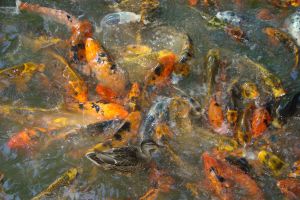
If you prefer you can hire an aquarium maintenance service to come to your home or office and care for your fish tank and its occupants. On the other hand, taking care of your aquarium fish yourself can be a satisfying and rewarding experience.
The Steps In Goldfish Care
The most important piece of equipment in your fish tank is the filtration system. There are several different types of filtration system. A type of filter that you will frequently encounter is a box that fits over the side of the tank. The water circulates through the filtration system, which usually uses charcoal or a similar filter media to filter out the impurities in the water. Another type of filtration system is a biological filter. Biological filtration can be used in conjunction with a charcoal filtration system, and permits good bacteria to grow in the tank which helps to keep the tank clean.
The number of fish you have in your aquarium can impact on the water quality, especially if you have too many fish in a tank that is too small. It is important to ensure that you have the correct goldfish population for the size of tank you own. Do not overcrowd your fish. After overcrowding, the next most likely cause of problems with your goldfish is overfeeding. Fish should only be fed an amount they can eat within a few minutes. If you feed your goldfish too much, the uneaten food will fall to the bottom of the tank and turn into sludge which will not provide a healthy environment for your fish to live in. Uneaten food can also lead to algal growth.
Partial Water Changes
You will need to perform partial water changes every two weeks or so as a central part of your goldfish care. This keeps the algae level down and helps to maintain a healthy environment for your goldfish. Typically, siphoning off about 20 percent of the water is adequate. Replace with fresh water. If your tap water contains chlorine it is imperative that you add a chlorine neutralizer when adding fresh water to your fish tank.
Observe Your Fish Daily
Observe your goldfish on a daily basis. Ensure that all your equipment is running properly. Always make sure your filter is running as it can sometimes lose its prime if there is a power outage. Make sure your air pump is working properly, too, to ensure your goldfish have plenty of oxygen. Goldfish don't need a heater but if you have tropical fish they will require a heater to maintain the water temperature.
Just keeping an eye on your fish on a daily basis and observing their behavior can help with your goldfish care and tank maintenance. If you notice any behavioral problems with your fish, take a proactive approach to determine what is wrong with them and treat the symptoms immediately. Sick fish should be put into a quarantine tank if possible while being treated.
Maintaining a clean aquarium and a healthy living environment are not difficult tasks in goldfish care, and a little preventive fish tank maintenance on a regular basis will keep your fish healthy and disease free.
My First Fish Tank
Having an aquarium can be a source of great joy and satisfaction. People who have fish as pet find that they feel calmer and happier when they watch the aquarium. Fish make really great pets, and do not make hardly any demands on your time or any other resource. This is why they are considered favorite pets in millions of houses.
Some Facts and Myths about Fish Tank Care
There are many myths surrounding the setting up and maintaining of the fish tank care. Let us look into some of them:
Myth ? you need to remove the fish from the aquarium before washing it or changing the water.
Truth ? the fish are actually stressed terribly when displaced from their environment, specifically after being chased and caught in nets.
Myth ? Changing the gravel is the best way of having it cleaned or washing it under the tap water.
Truth ? changing of gravel will actually harm the fish, as with time the gravel will house friendly bacteria that help in clearing the fish waste, which in the long run will actually poison your fish.
Myth ? you need to wash the tank as often as you can;
Truth ? you should actually wash as rarely as possible, because the longer you leave the system by itself, the better the system works. You should have good filters attached to it and ensure that the water is oxygenated well.
Myth ? you should replace all the water from the tank and replace it fully with new water every time you wash the tank;
Truth ? you should actually replace only 20-25% of the water, otherwise you will create an imbalance in the system and harm your fish.
Myth ? you should abundantly feed your fish if you will be missing for a few days from the house;
Truth ? you should never overfeed your fish; this will not only cloud and pollute the water it will tempt the fish to overeat and kill them.
What Plants Do in a Fish Tank?
Live plants are an essential presence in every aquarium for many reasons. First, they add a natural and attractive look to the aquarium, and secondly, they provide the pet fish with a natural source of food. Presence of live plants reduces the growth of algae in the fish tank, but most importantly, live plants produce oxygen through photosynthesis and continuously add it to the water for the fish to breathe. Also, plants absorb wastes of the fish like exhaled carbon dioxide and ammonia; if allowed to accumulate in the tank water it can be hazardous for the fish's health.
Keeping a Healthy Aquarium with Plants
Certain considerations need to be taken into account when letting live plants inhabit your home aquarium. The following points are important to consider:
Only select those species of plants for your fish tank that can stay healthy while completely submerged. Make sure the plants you select are able to survive well in the existing lighting conditions and chemical nature of the tank water; most plants are suited to live in pH values 6.5-7.5. Also, check about the suitable temperature range for the plants you select. Certain plant types, like sagittaria, are fast growing and tolerant of even hard water; thus, they are ideal for the first inhabitants of the fish tank. More sensitive plants can be added later for keeping diversity and giving the aquarium a natural lush and attractive look. For visual effects, you can use a combination of plants of varying sizes so as to impart an impression of depth and contrast. Red plants, like ludwigia, bring a beautiful contrast against the natural green of other species. Plants with tall stems and those bearing adventitious roots need regular pruning so as to keep the other plants healthy against their overshadowing effects.
Fish tank care is something you learn with practice. The aquarium will become a proper self-sustaining system, which will need to be nurtured to stay so; in this case, fish tank care will not involve cleaning, as much as maintaining the right balance of this system. With time, and if your fish tank care is okay, you will need to wash and/or maintain the tank very rarely because the system itself will take care of itself, just like in the nature.
Both Alison Stevens & Michael Saville are contributors for EditorialToday. The above articles have been edited for relevancy and timeliness. All write-ups, reviews, tips and guides published by EditorialToday.com and its partners or affiliates are for informational purposes only. They should not be used for any legal or any other type of advice. We do not endorse any author, contributor, writer or article posted by our team.
1997 Jaguar Xk8 Convertible To improve poise and grace, Jaguar used complementing color schemes, upholstery, and devices. The car can serve as a mighty rival of Mercedes SL-Class and Lexus SC430