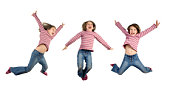
But running and jumping isn't as easy as it seems. In fact, watching triple jump athletes is something that redefines the way that most of us look at training our bodies – and we can all learn from that.
Realizing what you need
One of the main components of strength training for triple jump events is knowing what muscles are going to be used and movements you need to do. By watching others perform that jump, the athlete can see the complexity of the movements and how the legs move during the event.
The leg muscles are strained in several ways: moving toward the final jump, stopping quickly to repeat the jumps, and then moving in the air to get the longest distance in the sand.
All of the muscles in the legs are being used, but that's not the only part of the body in action. Strength training for triple jump events also has to include the practice of the jump as well as strengthening the core so that the body can move in a forward direction.
Toughening up the legs
There's a fine line to be drawn in strength training for triple jump. While you need to have strong legs, they also need to be flexible enough to be able to change their direction quickly. The triple jump consists of three jumps before finally landing in the sand and being measured for the overall length – which determines the winner. The legs need to be strong enough to propel themselves forward as well as strong enough to propel in an upward motion.
To accomplish both of these goals, the athlete needs to create a strength training for triple jump program that includes plyometrics. Plyometrics is the application of jumping as a form of conditioning.
When you practice propelling yourself upwards, the muscles that are being used will condition themselves to work harder to accomplish this well. Better put, the more you practice jumping, the better you will become at it. This is also known as functional training.
Many athlete training centers have equipment or special weights that can be used to help with plyometric workouts for strength training for triple jump events.
Toughening up the core
And while you might be able to jump, you also need to be able to keep your self steady on the ground and in the air. To accomplish a well rounded strength training for triple jump routine, you need to work on your core muscles. Ways to strengthen your abs and core include yoga and Pilates, but can also include basic abdominal exercises and back exercises as well. The point is to create strength in your middle to help balance your overall movements.
Strength training for triple jump isn't just something that athletes alone can do – you too can benefit from making sure that your legs are trained in several ways so that they're strong enough for anything.
Strength Training For Running
Running with an injury or over-training? Often it is best to go back to basics
Injuries can affect us all regardless of age, sex or ability. But can we manage or limit the number of times we get injured? We can by going back to basics.
But we are not talking about fitness levels and stretching. Instead we mean back to biomechanics.
By assessing, on a regular basis, your biomechanics you can help eliminate and prevent a number of injuries and problems that athletes suffer from. The body compensating for weak links can cause restriction that in turn can cause pain and injury.
Calf and hamstring injuries are commonly caused by a tight sciatic nerve. The muscles provide a protective spasm to the nerve during locomotion and if stretched or loaded sufficiently the muscles can spasm enough to cause themselves to tear - or cramp up - which can feel like a tear. By mobilising the nerve it releases tension in the muscles and reduces the likelihood of this event.
? Tight calves
TIGHT calves can cause over pronation. The dorsi-flexion (moving the ankle upwards) is not available from the ankle joint due to the tight calves, so it has to come from the sub talar joint. It comes as part of the pronation mechanism though and so increases the amount of pronation as well. This causes shin related injuries as well as knee and Achilles problems.
Remember that tight calves are often from a tight sciatic nerve, so by mobilising the nerve, we can help with preventing and normalise these injuries.
The effects our biomechanics have on our body and the vicious circle of injury and pain it can cause is shown again when discussing your hips and pelvis which are so important to our running but generally overlooked until the athlete is in severe pain or in fact injured.
? Rotated pelvis
A ROTATED pelvis can go unnoticed for many years until the compensations start to cause problems. Typically a leg length discrepancy (LLD) can result from a rotated pelvis and the leg must compensate for this. It'll either flatten the foot (pronate it), bend the knee more, or drop the hip more. Pronation will increase the load on the leg (see ?Tight calves? section), and dropping the hip will increase the the spasm to the glutes / piriformis ?prophylactically?, in other words preventatively, (and also if necessary), then we are helping to reduce all of the above.
? Assess yourself
AS a result of one of the largest studies in biomechanics by Galileo Health and distributed by HumanLab Sports we can all benefit from assessing our biomechanics, in the comfort of our own home. You do not need to be a clinician as they have developed a CD ROM software program that helps you assess yourself with the software prescribing the exercises needed to remove the problems and in turn prevent or normalise the body from developing them in the future.
As part of the program is injury prevention the CD takes you through a series of core stability work educating you on how to engage your core and to engage it while doing peripheral movements, so it becomes second nature to you when running.
It finishes off with the final section on the trunk and torso exercises.
? Benefits of biomechanics
SOME athletes out there might not feel the need to help prevent a problem they don't feel they have. So let's look briefly at some of the other benefits biomechanics has on your performance. A tight sciatic nerve or tight piriformis (hip) can affect your stride length, your knee drive and your power output.
A tight sciatic nerve can affect your quadriceps output by as much as 15 per cent. The effect of biomechanics for the professional athlete and the novice for injury prevention or performance is a must have tool. It will help you prevent injuries, enjoy your running and help with your performance.
The program used in helping address any issues you may have now or in the future is worth having. But it doesn't stop there.
It can be used as a training guide to indicate that you may be over-training or that a new technique or training plan is causing you problems.
GO AND take a look at the website www.humanlabsports.com
and see what you think. The CD-ROM is priced at only $39.10
Both Lynn Vandyke & Humanlab are contributors for EditorialToday. The above articles have been edited for relevancy and timeliness. All write-ups, reviews, tips and guides published by EditorialToday.com and its partners or affiliates are for informational purposes only. They should not be used for any legal or any other type of advice. We do not endorse any author, contributor, writer or article posted by our team.
Lynn Vandyke has sinced written about articles on various topics from Personal Desktop, Fitness and Health. Lynn VanDyke is a master trainer and nutritionist focusing on straight-forward fat loss workouts. Her wildly popular ebook, Melt the Fat is available for immediate download. Bonuses are being offered for a limited time only. Learn more about Melt the Fat. Lynn Vandyke's top article generates over 18100 views. Bookmark Lynn Vandyke to your Favourites.