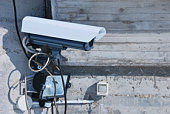
Video surveillance cameras are more prevalent today than anytime in the past. Their use has surged along with the boom in technology as this new technology becomes cheaper and more sophisticated. There are numerous types and styles of surveillance cameras. For example, there dome cameras, hidden cameras, smoke detecting cameras, and "smart" cameras that are equipped with motion detectors, just to name a few.
Video surveillance cameras are classified according to the technology that is used in their design. CCTV [closed circuit TV] cameras are those that have a completely closed circuit and all the components are connected together. On the other hand, advanced digital cameras are those that connected by a circuit but can be located at any site around the world. Digital video recorders [DVRs] do not need VCR's and other recording equipment in order to capture or record on-site activities. The software is designed to automatically record unusual activity even in odd hours of the day.
You can find video surveillance cameras used in many different places. They are used in school buses and schools to monitor activities of students. You will also find them being used in retail establishments, public gathering places, traffic reporting, and many more places. Small hidden cameras know as nanny cams have been used successfully by parents concerned about their children's care from sitters and caretakers. Hidden cameras are also available for sale in “brick and mortar “stores and on the Internet. You find these cameras hidden in clocks, smoke detectors, and soft toys such as a teddy bear, just to name a few.
This style of camera is differentiated according to its effectiveness. A 360-degree revolving dome camera can capture images anywhere on the site. Infrared surveillance type cameras are found used by government and law enforcement agencies such as the SWAT for tailing suspects at night. They too are found mounted in police helicopters to aid them in searching suspects hidden in brush by either day or night.
Detective agencies and security agencies use these cameras to monitor people at their client's request. It is currently lawful in most areas to install a camera in a common public area and record public activities; however, there is a lot of debate over this subject. Even government agencies such as the Federal Bureau of Investigation [FBI] need a warrant in order to carry out video surveillance in private places or homes. Small hand held cameras, also available in the marketplace, help monitor the elderly and in nurseries and preschools where children are kept under watch.
Video surveillance cameras are available in the price range of $100 to $800 for the most part. However, it depends on the complexity of the technology used in them. Well-made fake cameras are also available for as less as $3, which act as deterrents for robbers and thieves but are not recommended in some applications.
Video Surveillance Cameras Wireless
Cities are a hive of activities. People go to schools, do their business, drive around traffic, and sell various things. Unfortunately, a city is also a thriving environment for notorious people and lawbreakers. It is not uncommon in any city that is everyday news about robberies, murders, speeding, DUI, or any other crime.
Due to the presence of these crimes and activities, law enforcement has developed ways and technologies to apprehend or at least monitor the perpetuators. For example, state police monitor regularly monitor freeways on the lookout for drug traffickers. Some policemen are assigned to go undercover and risk their lives during a stakeout. Other crude yet ingenious ways include placing realistic cardboard cutouts of police cars or officers to discourage criminals from doing their crimes! After all, a criminal would hesitate when he sees a police unit before committing a crime.
New technologies include the development of nonlethal weapons and the improvement of exiting technologies, such as, complicated databases and citizen identification. One of the more controversial technologies is the video surveillance camera. These cameras are located in many public places where police think that crime is most likely to happen.
In theory, video surveillance cameras can deter or even prevent crime. In theory, they are able to provide evidence for a crime. But do these theories really sound as good as they are?
To gauge how efficient surveillance cameras prevent crime is a somewhat problematic issue. That's because there are a lot of vague variables to take into consideration. No matter how skilled policemen and investigators are, they can't entirely be conclusive that a crime has been planned just because something suspicious came up in the surveillance report. In fact, other factors, such as, law enforcement strategies, the city's economy, and even the season can contribute to such vagueness.
For example, a recent study shows that since 2006, seventy-three cameras that are installed in the general Washington, DC area have never recorded footage that has helped solve crimes. For the local government, this has been a pain in the neck since it has invested millions of dollars for such equipment only to find out that the system is not as efficient as it was predicted.
So are CCTVs useless? It's far from it. Knowing that there are hidden cameras around, criminals now think twice before doing their nefarious crimes. In fact, the New York police department stated that along with increased police patrols, video surveillance cameras have made the crime rate in the Big Apple drop to 30 percent. This is especially true in high-crime neighborhoods such as in the Bronx.
Other U.S. cities reported the same results. For example, in New York city's urban housing centers, crime dropped at 36 percent. In Baltimore, crime rate dropped at 17 percent; in Philadelphia, 37 percent.
Aside from the more nefarious crimes, the presence of these cameras also reduced auto-related crimes and accidents by as much as 41 percent. And, of course, they are always helpful for post-crime investigations.
Both Bill Wallmuller & Steve Strong are contributors for EditorialToday. The above articles have been edited for relevancy and timeliness. All write-ups, reviews, tips and guides published by EditorialToday.com and its partners or affiliates are for informational purposes only. They should not be used for any legal or any other type of advice. We do not endorse any author, contributor, writer or article posted by our team.
Bill Wallmuller has sinced written about articles on various topics from Social Issues, Parenting and Home Security. Bill Wallmuller is the founder of Merokee Enterprises and is committed to everyone's safety and the war on crime. Please visit http://www.surveillance-e. Bill Wallmuller's top article generates over 27100 views. Bookmark Bill Wallmuller to your Favourites.